
Description
Description
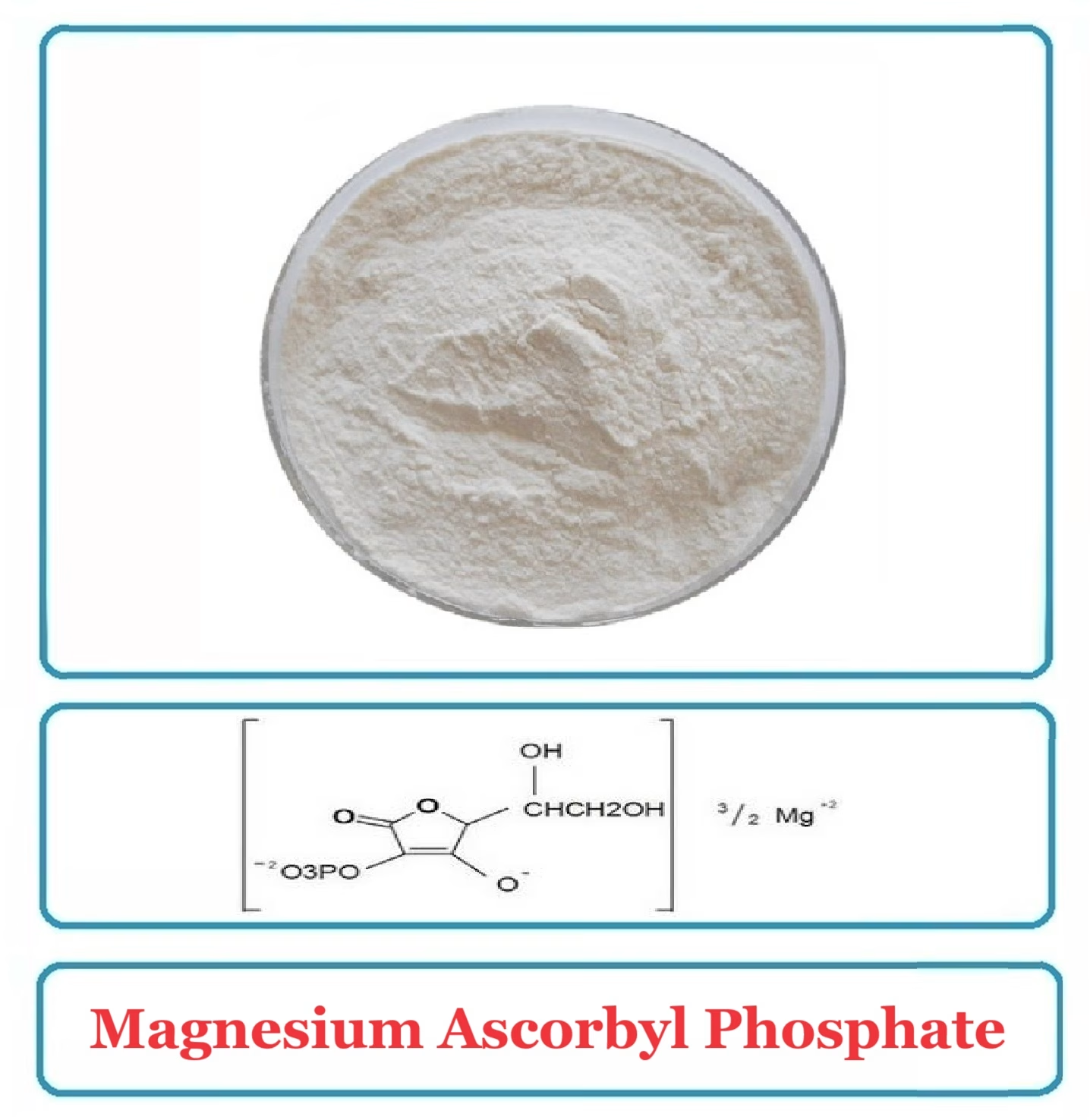
Magnesium Ascorbyl Phosphate (MAP) is a stabilized, phosphorylated vitamin C derivative used in aqueous and emulsion systems where classical L-ascorbic acid would create unacceptable pH, oxidation, or sensory constraints. The magnesium salt provides a practical route to vitamin C positioning in moisturizers, serums, and brightening systems formulated closer to physiologically comfortable pH.
Chemical & Technical Profile
| INCI / Identity | Magnesium Ascorbyl Phosphate |
|---|---|
| CAS No. | 113170-55-1 |
| Molecular Formula | C12H12Mg3O18P2 |
| Molecular Weight | 579.08 g/mol |
| Physical Form | White to off-white powder |
| Solubility | Water-dispersible to water-soluble depending on pH and grade |
| Functional Category | Phosphorylated vitamin C derivative |
Mechanism of Action / Technical Function
Skin phosphatases can dephosphorylate MAP and release ascorbate. The resulting vitamin C participates in antioxidant chemistry and biochemical pathways associated with collagen synthesis and melanogenesis control. MAP therefore behaves as a pro-vitamin-C system whose performance depends on conversion and formulation delivery rather than on the strongly acidic direct-deposition approach used for free ascorbic acid.
Formulation Guidelines
Disperse or dissolve MAP in purified water with adequate mixing. Solubility is strongly influenced by pH and ionic environment, so a controlled premix is preferable to direct addition into a finished gel. Avoid strongly acidic conditions that can destabilize the phosphate ester and reduce practical solubility. Incorporation after the hottest process stage is preferred. MAP contributes electrolytes and can reduce viscosity of salt-sensitive polymers; choose rheology modifiers with sufficient electrolyte tolerance and evaluate polymer hydration before introducing the active.
Compatibility & Stability
Monitor pH, clarity, precipitation, viscosity, color, and long-term active stability. Incompatible ionic interactions can create haze or loss of viscosity even when the active remains chemically intact. Chelation and oxygen control are useful in complex aqueous systems.
R&D, Scale-Up & Quality Control
Critical quality attributes for Magnesium Ascorbyl Phosphate Powder include pH, dispersion/solution clarity, color, and viscosity response. Before release, verify that no phosphate-related haze, precipitation, or unacceptable viscosity loss occurs.
Packaging, Shipping & Storage
Supplied in a sealed aluminum pouch. Store tightly closed, dry, cool, and protected from heat and humidity. Avoid prolonged exposure to high-temperature distribution conditions.
Estimated Delivery: 10–15 Business Days
Applications
Vitamin C moisturizers, brightening serums, facial gels, emulsions, lotions, masks, and multi-active tone-support formulations.

Reviews
There are no reviews yet.