
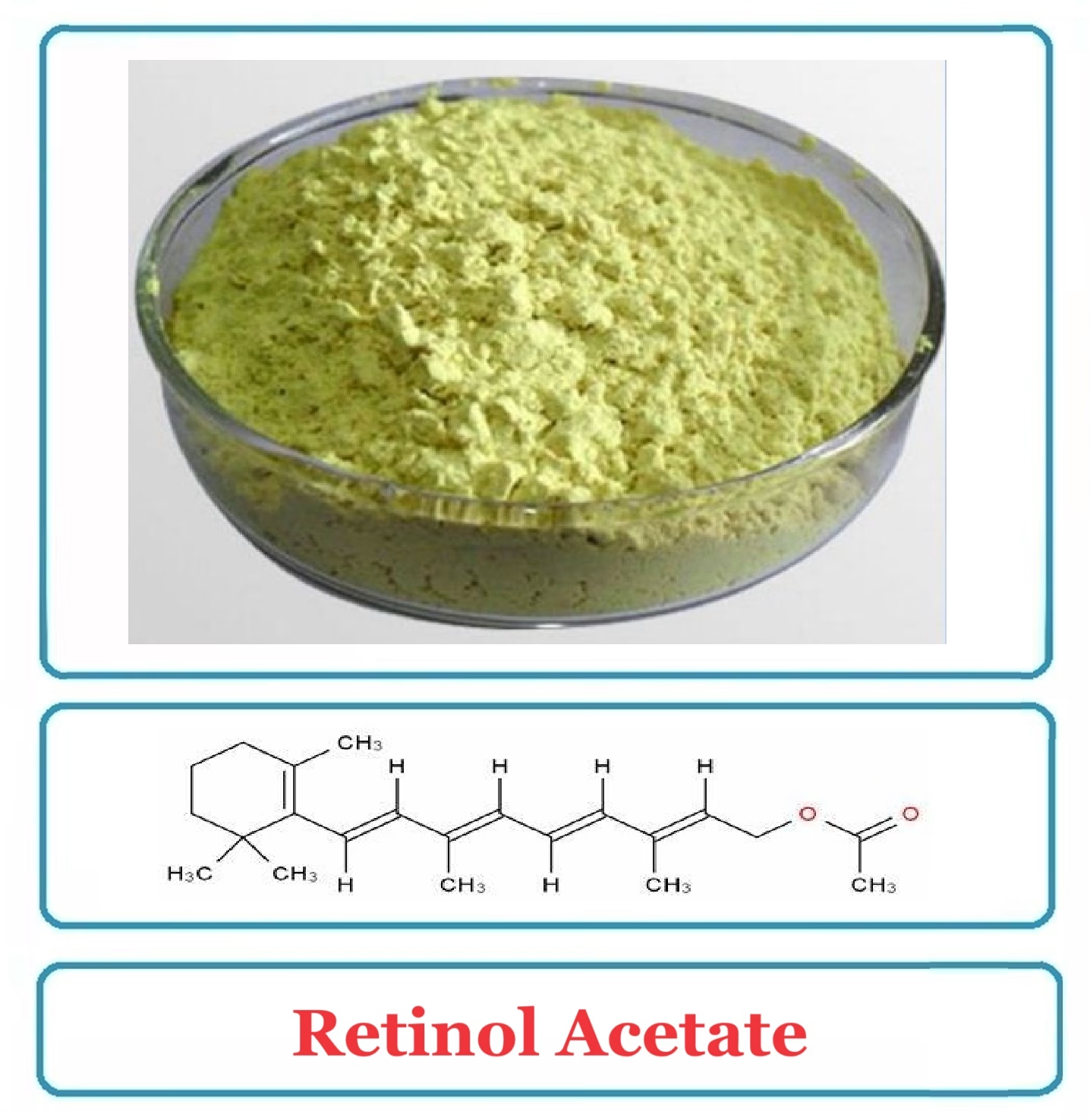
Description
Description
Retinyl Acetate is the acetate ester of retinol and a lipophilic vitamin A derivative used in oil phases, creams, emulsions, and anhydrous systems. Esterification improves storage and handling stability relative to free retinol, while retaining the ability to enter the cutaneous retinoid metabolic pathway after enzymatic hydrolysis.
Chemical & Technical Profile
| INCI / Identity | Retinyl Acetate |
|---|---|
| CAS No. | 127-47-9 |
| Molecular Formula | C22H32O2 |
| Molecular Weight | 328.49 g/mol |
| Physical Form | Yellow to orange oily solid or viscous material depending on grade |
| Solubility | Oil-soluble; insoluble in water |
| Functional Category | Vitamin A ester / skin-conditioning retinoid precursor |
Mechanism of Action / Technical Function
Following topical deposition, esterases can hydrolyze Retinyl Acetate to retinol. Retinol is subsequently oxidized to retinaldehyde and then to retinoic acid, the nuclear-receptor-active metabolite. Because this pathway requires multiple biochemical conversion steps, Retinyl Acetate should be understood as a vitamin A precursor rather than as a direct retinoic-acid receptor agonist.
Formulation Guidelines
Incorporate through the oil phase or a compatible lipophilic carrier. Minimize prolonged heating and introduce as late as practical in hot-process emulsions. Protect the batch from unnecessary air entrainment and strong light. Retinyl Acetate is compatible with many emollients, oils, waxes, and oil-soluble antioxidants, but its concentration should be selected within the complete vitamin A exposure strategy of the finished product. Avoid combining multiple retinoids without a clear dosage rationale.
Compatibility & Stability
Oxidation, isomerization, color change, and loss of potency are the principal stability concerns. Tocopherol or other oil-phase antioxidant support can improve robustness, but packaging remains critical. Monitor color, odor, assay where available, and emulsion stability.
R&D, Scale-Up & Quality Control
R&D qualification of Retinyl Acetate should include identity, color, odor, oil-phase clarity, and oxidation. For manufacturing scale-up, define and control oil-phase dissolution, thermal exposure, antioxidant sequence, and filling temperature rather than transferring only the ingredient percentages.
Packaging, Shipping & Storage
Supplied in sealed light-protective packaging. Store tightly closed, cool, and protected from direct light and oxygen exposure. Avoid prolonged hot transport and repeated opening.
Estimated Delivery: 10–15 Business Days
Applications
Anti-aging creams, night emulsions, facial oils, eye-area products, serums, balms, and vitamin A treatment systems.


J***H –
Very helpful and responsible seller. Delivered the certificate of analysis. Therefore, perfect score. Recommended.
K***e –
As described. Quick shipping and arrived to Canada in 20 days
P***O –
Excellent the product I will buy it again
N***o –
Prima product
N***i –
Well received, not yet try