
Description
Description
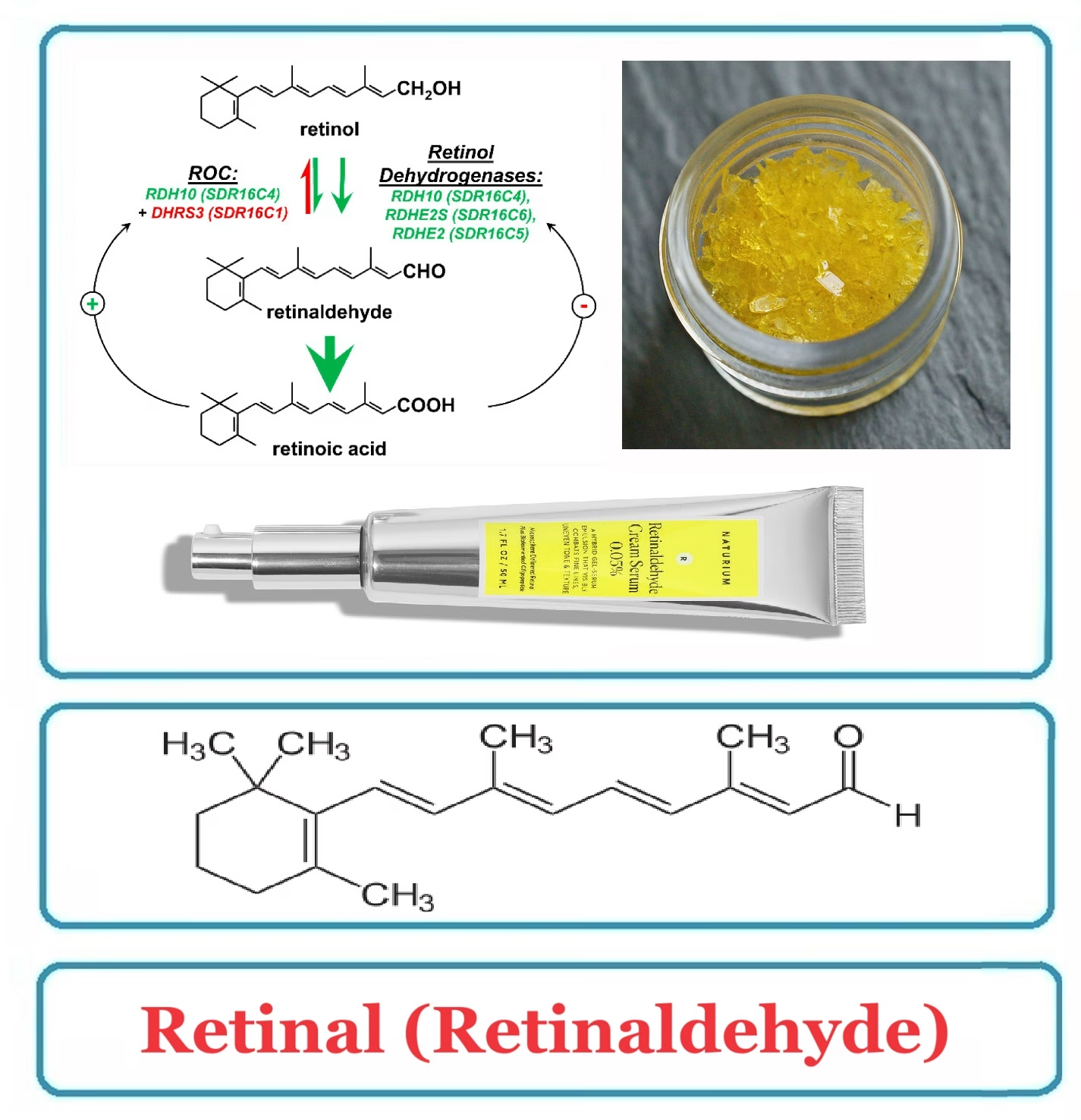
Retinaldehyde (Retinal) is the aldehydic form of vitamin A and a direct metabolic precursor of retinoic acid. Its position in the retinoid pathway—retinol → retinaldehyde → retinoic acid—gives it particular relevance in advanced anti-aging and skin-renewal formulations.
Chemical & Technical Profile
INCI: Retinal. CAS No.: 116-31-4. Molecular formula: C20H28O. Molecular weight: 284.44 g/mol. Physical form: yellow to yellow-orange powder. Functional class: retinoid / skin-conditioning active. Retinal has very low aqueous solubility and should be treated as a lipophilic, oxidation-sensitive active rather than as a conventional water-soluble powder.
Mechanism of Action
After topical delivery, retinaldehyde can be oxidized intracellularly by retinal dehydrogenases to retinoic acid. Retinoic acid subsequently interacts with nuclear retinoid signaling pathways, particularly retinoic acid receptors, regulating transcriptional programs associated with epidermal differentiation, keratinocyte turnover, and extracellular-matrix homeostasis.
Formulation Guidelines
Retinal should not be dispersed directly into the finished aqueous phase. Pre-solubilization in a compatible solvent or lipid carrier, controlled dispersion, encapsulation, or another engineered delivery system is required. Incorporate during cool-down whenever possible and minimize exposure to heat, oxygen, and strong process lighting. Published human topical studies have evaluated retinaldehyde at 0.05% and 0.10%; these values are literature references, not a universal recommended use level for every retinal grade or vehicle. Antioxidant support, metal-ion control, low-aeration processing, and opaque or air-restrictive finished packaging are recommended.
Compatibility & Stability
The extended conjugated polyene structure makes retinal highly susceptible to photo-oxidation and chemical degradation. Monitor color shift, loss of uniformity, crystallization, odor change, and active-content loss during stability studies. A robust QC program should also compare refrigerated, ambient, and accelerated samples and document any change in dispersion state or visible particle formation.
R&D, Scale-Up & Quality Control
Retinaldehyde Powder (Retinal) should be qualified against retinal identity/assay, color, dispersion state, and oxidation trend, using a retained reference where visual change is relevant.
Packaging, Shipping & Storage
Supplied in a sealed, light-protective aluminum pouch. Keep tightly closed and protected from light. Long-term storage at approximately −20 °C is preferred. Avoid prolonged exposure to elevated temperatures during transport and after receipt.
Estimated Delivery: 10–15 Business Days
Applications
Night serums, anti-aging creams, eye-area products, emulsions, anhydrous treatments, and advanced retinoid systems.

Reviews
There are no reviews yet.