
Description
Description
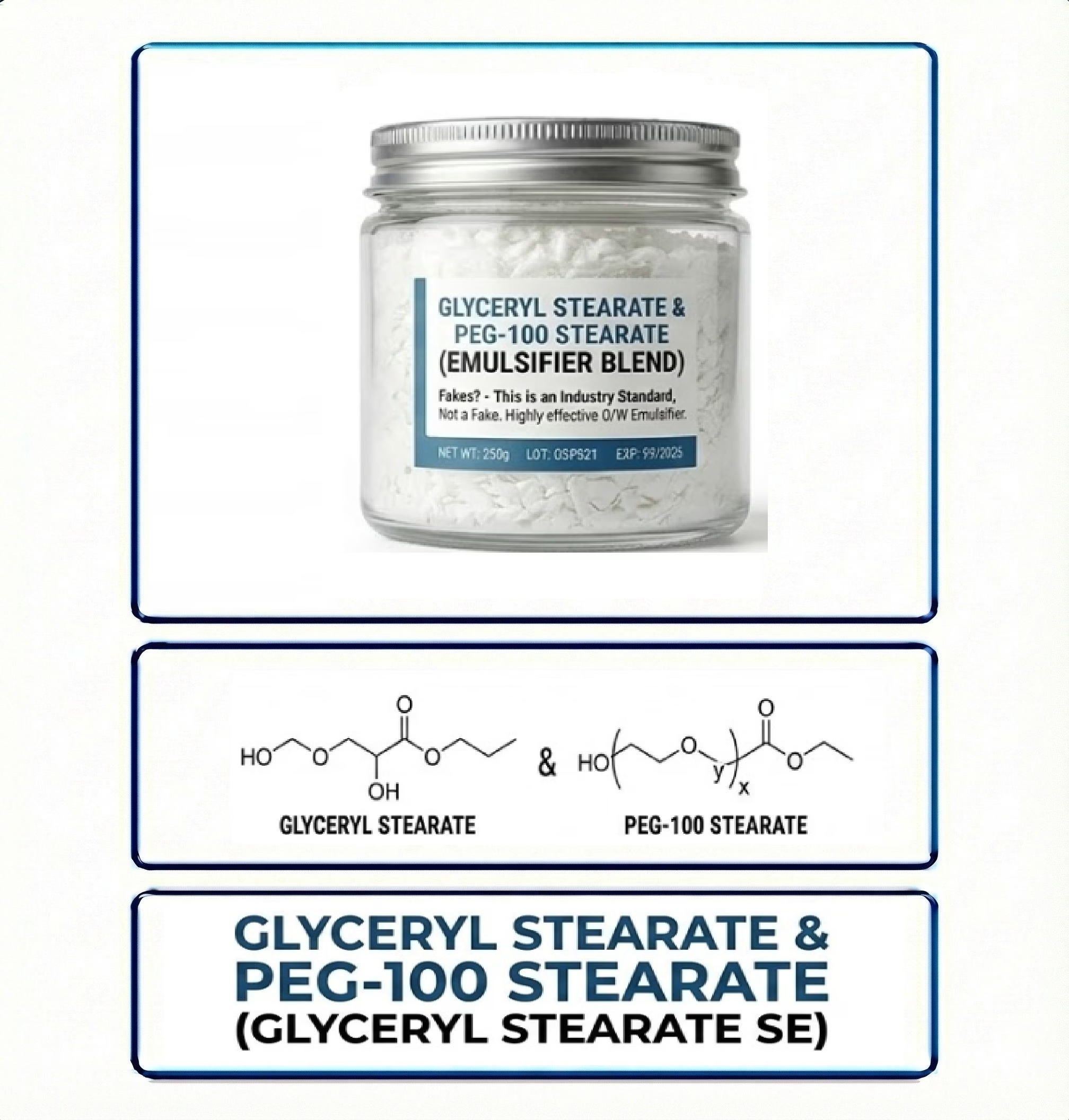
Glyceryl Stearate & PEG-100 Stearate is a widely used nonionic emulsifier blend combining lipophilic glyceryl stearate with hydrophilic ethoxylated stearate. The paired HLB profile provides robust oil-in-water emulsification across a broad range of oils and is a standard backbone for creams and lotions.
Chemical & Technical Profile
| INCI / Identity | Glyceryl Stearate (and) PEG-100 Stearate |
|---|---|
| CAS No. | Mixture; no single CAS |
| Molecular Formula | Nonionic fatty ester blend |
| Molecular Weight | Not applicable |
| Physical Form | White to off-white flakes or pellets |
| Solubility | Oil-phase melt; disperses as nonionic O/W emulsifier |
| Functional Category | Primary nonionic oil-in-water emulsifier |
Mechanism of Action / Technical Function
PEG-100 Stearate provides the principal hydrophilic interfacial film, while Glyceryl Stearate contributes co-emulsification, interfacial packing, and oil-phase structure. Together they reduce interfacial tension and form a stable nonionic film around oil droplets. Final rheology is usually developed with fatty alcohols, waxes, or water-phase polymers.
Formulation Guidelines
Melt fully in the oil phase. Heat water and oil phases to compatible temperature, combine under homogenization, then cool with controlled mixing. Do not rely on the emulsifier blend alone to create high viscosity; build the desired rheology separately. High electrolyte loads, very polar oils, and unusual silicone packages should be tested rather than assumed compatible.
Compatibility & Stability
Monitor droplet size, viscosity, creaming, phase separation, and heat/cool cycling. Nonionic emulsions can be robust across pH but still fail from insufficient interfacial coverage or poorly designed oil-phase structure.
R&D, Scale-Up & Quality Control
R&D qualification of Glyceryl Stearate & PEG-100 Stearate should include emulsifier appearance, melt uniformity, droplet size, and viscosity development. For manufacturing scale-up, define and control oil/water phase temperatures, homogenization energy, fatty-alcohol structure, and cooling profile rather than transferring only the ingredient percentages. The batch is technically acceptable when the emulsion remains stable through centrifuge and heat/cool testing without creaming.
Packaging, Shipping & Storage
Supplied in a sealed aluminum pouch. Store tightly closed, cool, dry, and protected from heat and moisture.
Estimated Delivery: 10–15 Business Days
Applications
Creams, lotions, facial moisturizers, body care, cleansers, hair conditioners, and general-purpose O/W emulsions.

Reviews
There are no reviews yet.