
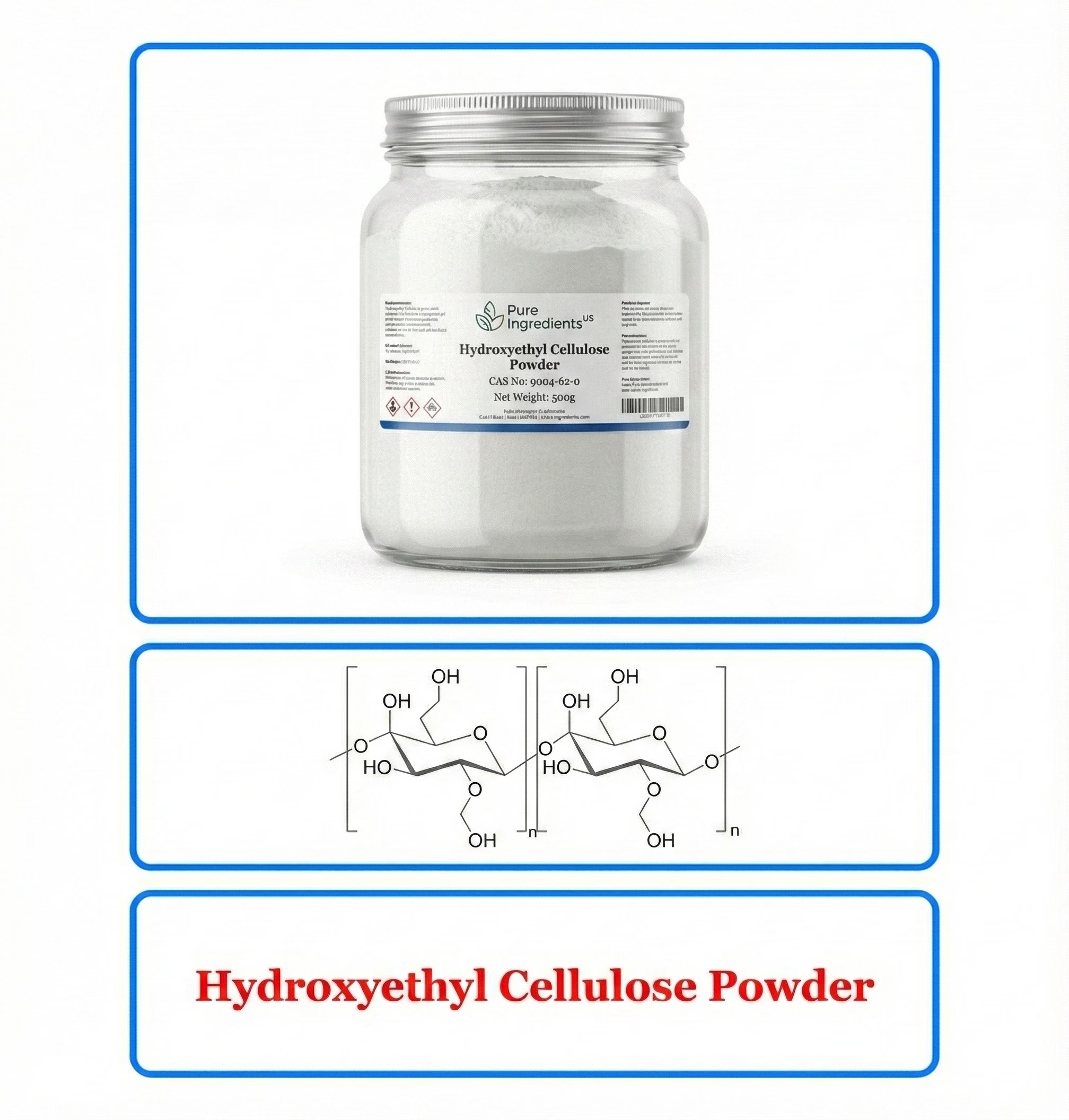
Description
Description
Hydroxyethyl Cellulose (HEC) is a nonionic cellulose ether used to thicken aqueous systems across a broad pH range. Compared with ionic acrylic thickeners, HEC offers useful tolerance to many salts and surfactants and is widely used in shampoos, gels, serums, and personal-care liquids.
Chemical & Technical Profile
| INCI / Identity | Hydroxyethylcellulose |
|---|---|
| CAS No. | 9004-62-0 |
| Molecular Formula | Cellulose ether polymer |
| Molecular Weight | Grade-dependent |
| Physical Form | White to off-white powder |
| Solubility | Water-soluble; hydrates to clear or slightly hazy solutions |
| Functional Category | Nonionic cellulose rheology modifier |
Mechanism of Action / Technical Function
Hydroxyethyl substitution disrupts the strong intermolecular hydrogen bonding of cellulose and enables hydration in water. Hydrated polymer chains overlap and entangle, increasing viscosity without requiring neutralization. Because the polymer is nonionic, its rheology is less sensitive to moderate electrolyte levels than many anionic thickeners.
Formulation Guidelines
Disperse slowly into agitated water or pre-wet in glycerin/glycol to avoid lumps. Allow full hydration before final viscosity assessment. Some grades hydrate more rapidly at elevated temperature, but unnecessary heat should be avoided when sensitive actives are present. In surfactant systems, evaluate foam and clarity because polymer grade and molecular weight influence both.
Compatibility & Stability
Monitor viscosity after standardized hydration time, pH, clarity, syneresis, and microbial quality. Cellulose polymers can be degraded by cellulase contamination and strong oxidants. High shear can reduce molecular weight in some grades.
R&D, Scale-Up & Quality Control
Hydroxyethyl Cellulose (HEC) should be qualified against HEC powder dispersion, hydration completeness, viscosity, and clarity, using a retained reference where visual change is relevant. During scale-up, document pre-wetting, addition rate, hydration temperature/time, and surfactant/electrolyte sequence and reproduce the laboratory sequence without unplanned thermal or shear exposure. A practical release gate is confirmation that the target viscosity is reproducible without lumps, enzyme-related viscosity loss, or syneresis.
Packaging, Shipping & Storage
Supplied in a sealed aluminum pouch. Store tightly closed, cool, dry, and protected from humidity. Prevent airborne dust during charging.
Estimated Delivery: 10–15 Business Days
Applications
Gels, serums, shampoos, body washes, lotions, hair styling products, suspensions, and salt-containing aqueous systems.
Related Ingredients
SEPINOV EMT 10-Type • PEG-90M (POLYOX-Type)
Documentation & Use
- Certificate of Analysis (COA) for the lot shipped: available on request at info@pureingredients.us.
- Safety Data Sheet (SDS): available on request.
- SKU: PI-RM-0076
For cosmetic formulation use only. Not for direct application to skin.

Reviews
There are no reviews yet.