
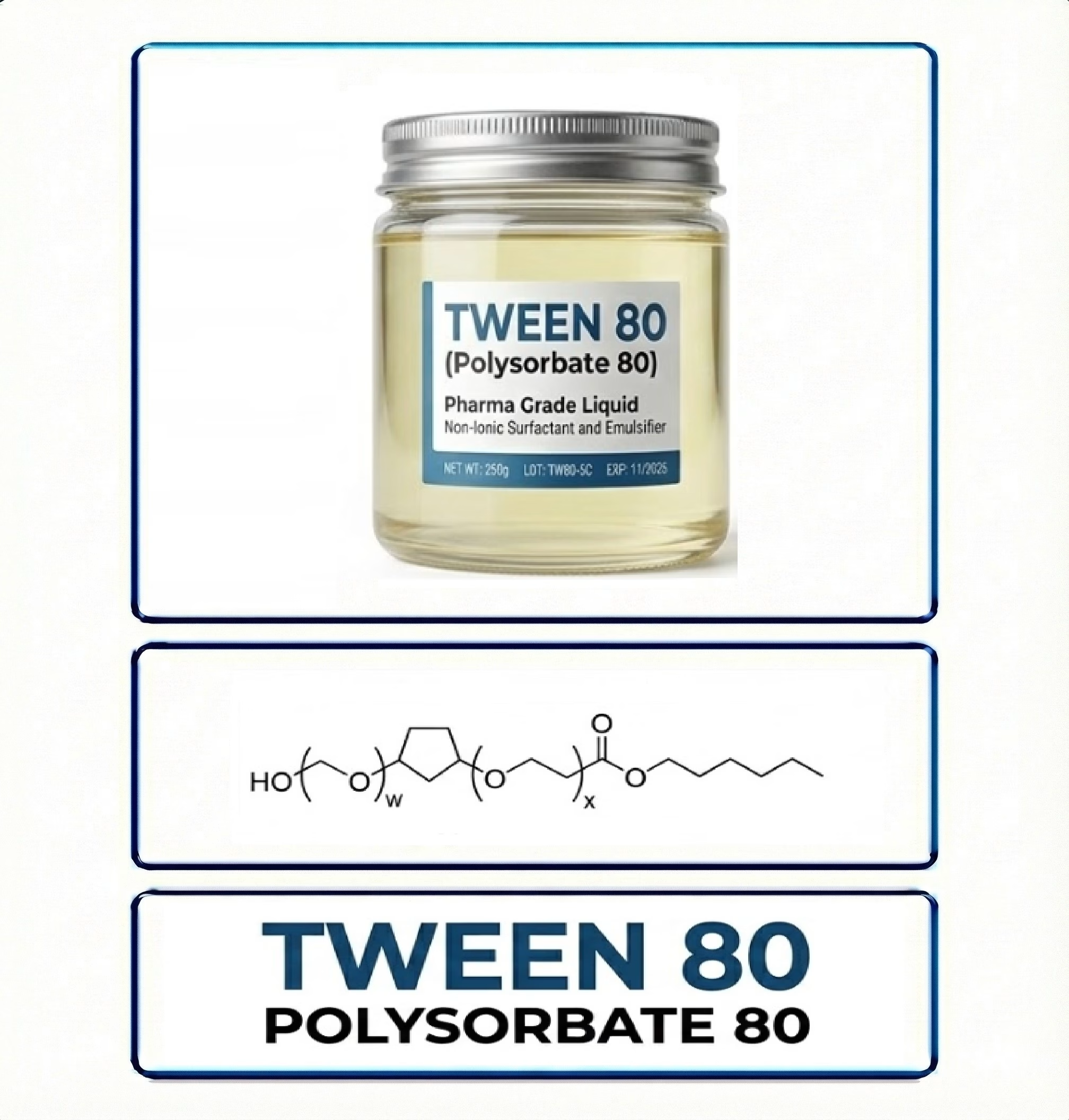
Description
Description
Polysorbate 80 is a high-HLB nonionic surfactant produced from ethoxylated sorbitan oleate and is widely used to solubilize fragrances, oils, and lipophilic actives in water-rich formulations. Its strong hydrophilic character makes it more suitable for O/W and solubilization work than for primary W/O emulsification.
Chemical & Technical Profile
| INCI / Identity | Polysorbate 80 |
|---|---|
| CAS No. | 9005-65-6 |
| Molecular Formula | Ethoxylated sorbitan oleate mixture |
| Molecular Weight | Not applicable |
| Physical Form | Yellow to amber viscous liquid |
| Solubility | Dispersible/miscible in water; solubilizes lipophilic materials |
| Functional Category | Nonionic solubilizer / emulsifier |
Mechanism of Action / Technical Function
Polyoxyethylene chains hydrate strongly in water while the oleate group associates with hydrophobic materials. Above the effective micellar concentration, Polysorbate 80 forms aggregates that incorporate oils within hydrophobic domains, increasing apparent aqueous solubility. The mechanism is micellar solubilization and interfacial tension reduction.
Formulation Guidelines
Pre-mix Polysorbate 80 with the fragrance or oil to be solubilized, then add water gradually while monitoring clarity. Required ratio depends on oil chemistry; fixed 1:1 rules are unreliable. High electrolyte concentrations can reduce clarity. In emulsions, use as a co-emulsifier rather than expecting it to build viscosity.
Compatibility & Stability
Monitor clarity, cloud point, odor, peroxide development, and preservative compatibility. The unsaturated oleate chain is susceptible to oxidation and can develop odor over time. Peroxide impurities are especially relevant in sensitive active formulations.
R&D, Scale-Up & Quality Control
For Polysorbate 80, incoming and in-process QC should control Polysorbate 80 color, odor, peroxide cleanliness, and solubilization performance. Pilot transfer should lock oil-to-solubilizer premix ratio, water dilution sequence, and electrolyte/fragrance loading, because these variables directly influence reproducibility. Release the formulation only after the final system remains clear and odor-stable without clouding or preservative-partition problems. Cloud-point drift should be compared against a retained production reference.
Packaging, Shipping & Storage
Supplied in a tightly sealed liquid container. Store cool, protected from direct light, air, and excessive heat.
Estimated Delivery: 10–15 Business Days
Applications
Fragrance solubilization, toners, facial mists, cleansers, micellar systems, O/W emulsions, and aqueous active delivery systems.

Reviews
There are no reviews yet.