

Description
Description
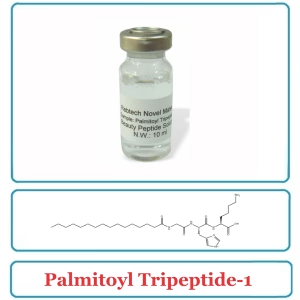
Matrixyl 3000-Type Peptide Powder is a trade-reference blend based on the well-known combination of Palmitoyl Tripeptide-1 and Palmitoyl Tetrapeptide-7. The system is used in advanced mature-skin formulations to provide complementary matrikine-type signaling within a low-dose peptide architecture.
Chemical & Technical Profile
| INCI / Identity | Palmitoyl Tripeptide-1 and Palmitoyl Tetrapeptide-7 type peptide blend |
|---|---|
| CAS No. | Mixture; no single CAS |
| Molecular Formula | Peptide blend |
| Molecular Weight | Not applicable |
| Physical Form | White to off-white powder |
| Solubility | Water-compatible after appropriate dispersion/solubilization |
| Functional Category | Palmitoylated matrikine peptide blend |
Mechanism of Action / Technical Function
The palmitoyl groups increase lipophilic character and help the peptides associate with skin-lipid and interfacial environments. The blend should therefore be viewed as a coordinated signal-peptide system rather than as a bulk protein ingredient.
Formulation Guidelines
Prepare a controlled aqueous or carrier premix and add during cool-down. Avoid prolonged heating, extreme pH, strong oxidants, proteases, and unnecessary high shear. Amphiphilic palmitoylated peptides can interact with surfactant micelles and emulsifier interfaces, so confirm uniform incorporation in the actual base. Do not calculate dosage by assuming equivalence with a branded liquid Matrixyl 3000 preparation; this powder is a type/reference grade and should be formulated according to its own active composition.
Compatibility & Stability
Monitor pH, clarity or dispersion quality, odor, precipitation, and emulsion stability. In multi-peptide systems, verify preservative compatibility and control total solids to prevent tack or haze.
R&D, Scale-Up & Quality Control
R&D qualification of Matrixyl 3000-Type Peptide Powder should include peptide-blend identity, dispersion quality, pH, and haze. For manufacturing scale-up, define and control Matrixyl 3000-Type premix preparation, cool-down addition, and contact with surfactant-rich interfaces rather than transferring only the ingredient percentages. The batch is technically acceptable when the palmitoylated peptide blend remains uniformly incorporated without precipitation or tack-related instability.
Packaging, Shipping & Storage
Supplied in a sealed aluminum pouch. Store tightly closed, cool, dry, and protected from light and humidity. Refrigeration is preferred for long-term peptide stability.
Estimated Delivery: 10–15 Business Days
Applications
Mature-skin serums, eye products, firming creams, emulsions, gel-creams, and advanced multi-peptide systems.
Related Ingredients
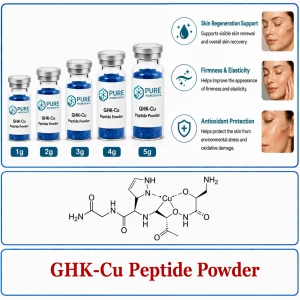
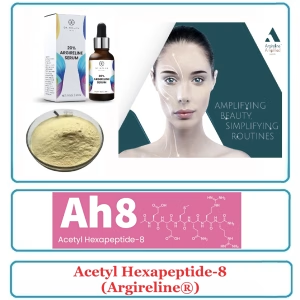
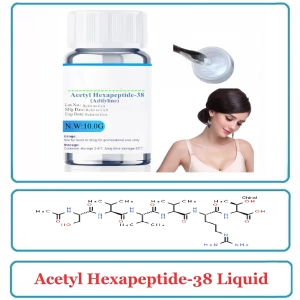
Acetyl Hexapeptide-8 • GHK-Cu / Copper Tripeptide-1
Documentation & Use
- Certificate of Analysis (COA) for the lot shipped: available on request at info@pureingredients.us.
- Safety Data Sheet (SDS): available on request.
- SKU: PI-RM-0027
For cosmetic formulation use only. Not for direct application to skin.
Frequently Asked Questions
What is Matrixyl 3000?
Matrixyl 3000 is the trade name of a well-known peptide pair: Palmitoyl Tripeptide-1 (Pal-GHK) and Palmitoyl Tetrapeptide-7 (Pal-GQPR). Both are palmitoylated peptides used in age-support serums, creams and eye-area formulas.
What is the INCI name? Is there another name for it?
The peptides are listed as Palmitoyl Tripeptide-1 and Palmitoyl Tetrapeptide-7. In Matrixyl 3000, Palmitoyl Tripeptide-1 was formerly listed as Palmitoyl Oligopeptide (an INCI name retired in 2013), so older labels and papers may use that name.
Is this the branded Matrixyl 3000?
No. Matrixyl® is a registered trademark of Sederma (Croda). This product is a Matrixyl 3000-type peptide powder based on the same two peptides. The branded material is supplied as a gel-type liquid, listed as Glycerin, Water, Butylene Glycol, Carbomer, Polysorbate 20, Palmitoyl Tripeptide-1 (Palmitoyl Oligopeptide on older labels) and Palmitoyl Tetrapeptide-7.
How much should I use?
Do not convert a branded liquid Matrixyl 3000 dosage directly to this powder; the active content is different. Set your use level from this powder’s own peptide composition. Contact us for the lot specifications before you fix your formula.
How do I add it to a formula?
Prepare a controlled aqueous or carrier premix and add it during cool-down. Avoid prolonged heating, extreme pH, strong oxidants, proteases and unnecessary high shear, and confirm uniform dispersion in your actual base.
Which sizes are available?
50 g, 100 g, 200 g, 500 g and 1 kg.

Reviews
There are no reviews yet.