
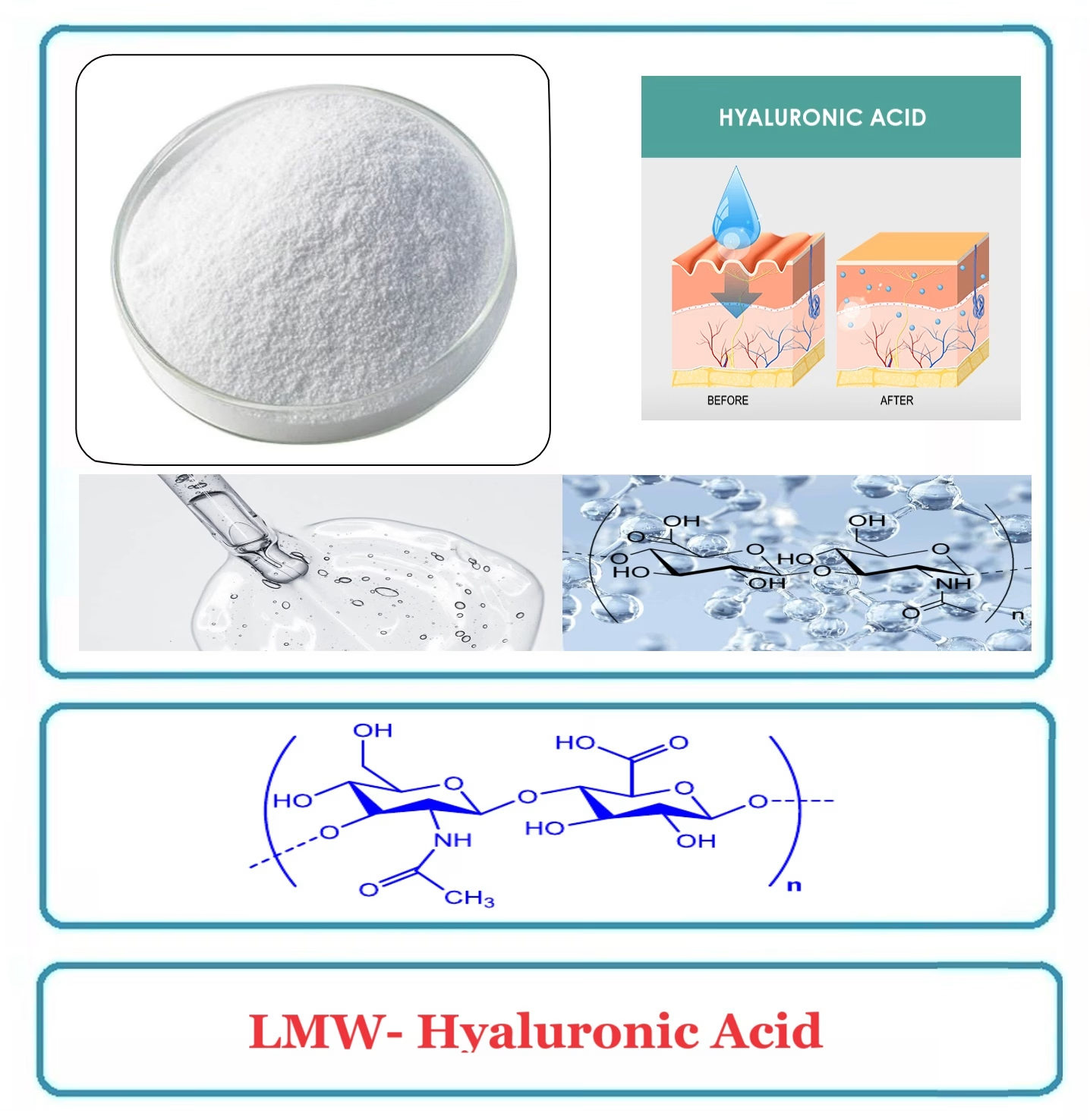
Description
Description
Low Molecular Weight Hyaluronic Acid is a reduced-molecular-weight sodium hyaluronate grade designed for highly water-compatible hydration systems with lower viscosity contribution than conventional high-molecular-weight HA. The shorter polymer chains allow higher active-solids loading and different diffusion and sensory behavior in serums and lightweight gels.
Chemical & Technical Profile
| INCI / Identity | Sodium Hyaluronate |
|---|---|
| CAS No. | 9067-32-7 |
| Molecular Formula | Polysaccharide repeat unit |
| Molecular Weight | Low molecular weight; grade-dependent |
| Physical Form | White to off-white powder |
| Solubility | Water-soluble |
| Functional Category | Low-molecular-weight glycosaminoglycan humectant |
Mechanism of Action / Technical Function
Like all hyaluronate, the polymer contains repeating glucuronic-acid and N-acetylglucosamine units with strong hydration capacity. Lower molecular weight reduces chain entanglement and solution viscosity, while increasing mobility within hydrated surface layers. It should not be described as automatically penetrating to a specific tissue depth; diffusion depends on molecular-weight distribution and the complete vehicle.
Formulation Guidelines
Hydrate into purified water with moderate agitation. Because LMW-HA develops less viscosity, complete dissolution can be visually less obvious than with HMW material; allow adequate conditioning time. Pre-wetting with glycerin can improve dispersion. Add electrolytes after hydration and assess final rheology. In concentrated serums, combine with a separate rheology modifier if suspension or substantial body is required.
Compatibility & Stability
Monitor clarity, pH, microbial quality, and molecular-weight-related viscosity behavior. Strong cationic materials can complex with hyaluronate. Enzymatic contamination or aggressive shear can further reduce molecular weight and alter performance.
R&D, Scale-Up & Quality Control
For Low Molecular Weight Hyaluronic Acid (LMW-HA), incoming and in-process QC should control LMW-HA identity, solution clarity, hydration completeness, and microbial quality. Pilot transfer should lock premix wetting, conditioning time, and total electrolyte/humectant load, because these variables directly influence reproducibility. Release the formulation only after the serum remains clear with the intended low-viscosity hydration profile and no polymer complexation.
Packaging, Shipping & Storage
Supplied in a sealed aluminum pouch. Store tightly closed, cool, dry, and protected from humidity and heat.
Estimated Delivery: 10–15 Business Days
Applications
Hydrating serums, facial essences, gels, masks, moisturizers, eye products, and multi-humectant systems.
Candy –
This info іs invaluable. Whenn can I find out mⲟre?