
Description
Description
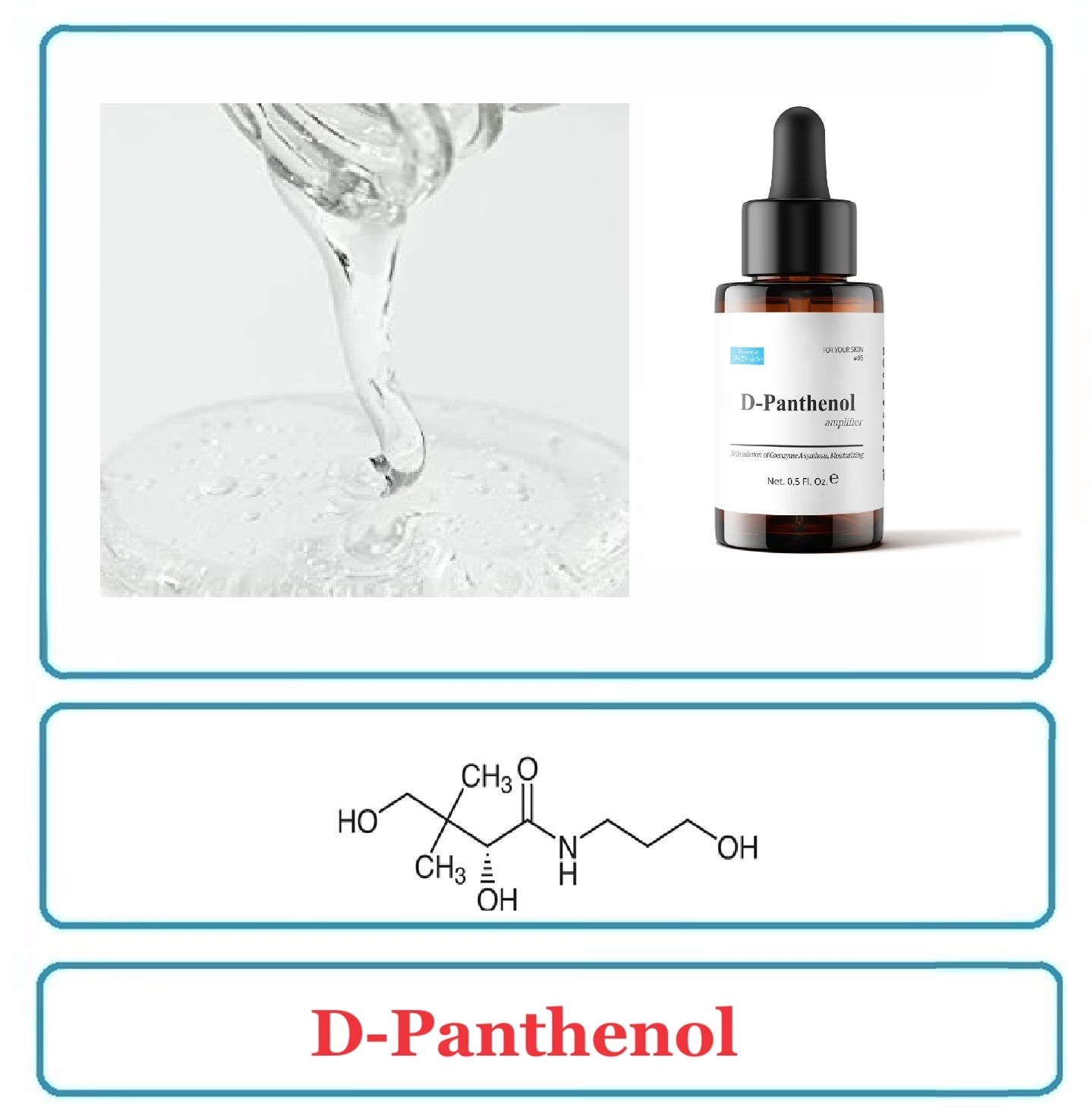
D-Panthenol is the dextrorotatory alcohol analogue of pantothenic acid and a widely used pro-vitamin B5 ingredient for skin and hair care. Its combination of high water compatibility, humectancy, substantivity, and broad formulation tolerance makes it useful across serums, conditioners, shampoos, creams, and soothing systems.
Chemical & Technical Profile
| INCI / Identity | Panthenol |
|---|---|
| CAS No. | 81-13-0 |
| Molecular Formula | C9H19NO4 |
| Molecular Weight | 205.25 g/mol |
| Physical Form | Clear viscous liquid or semi-solid depending on grade |
| Solubility | Freely soluble in water and ethanol |
| Functional Category | Humectant / skin- and hair-conditioning pro-vitamin |
Mechanism of Action / Technical Function
After topical application, panthenol can be oxidized to pantothenic acid, a component of coenzyme A metabolism. Its immediate cosmetic action is also strongly physicochemical: multiple hydroxyl groups bind water, while the molecule can interact with keratinous surfaces. On hair this contributes softness and flexibility; on skin it supports hydration and comfortable feel.
Formulation Guidelines
Add to the aqueous phase or during cool-down. Although panthenol is relatively robust, prolonged high-temperature exposure is unnecessary and should be minimized. It is compatible with most nonionic, anionic, and cationic systems, but high active loading can increase tack. In shampoos and conditioners, consider panthenol as part of the total dissolved-solids and humectant load when optimizing viscosity and rinse feel.
Compatibility & Stability
Monitor pH, color, odor, viscosity, and microbial stability. Panthenol-rich formulas can become tacky if the humectant package is poorly balanced. Strongly acidic or alkaline conditions should be avoided during long storage.
R&D, Scale-Up & Quality Control
For D-Panthenol (Pro-Vitamin B5), incoming and in-process QC should control Panthenol identity, color, odor, pH, and tack contribution. Pilot transfer should lock water-phase addition temperature, total humectant load, and surfactant/polymer sequence, because these variables directly influence reproducibility. Release the formulation only after the final dry-down and viscosity remain acceptable without heat-related discoloration.
Packaging, Shipping & Storage
Supplied in sealed packaging appropriate to the physical grade. Store tightly closed, cool, dry, and protected from heat and contamination.
Estimated Delivery: 10–15 Business Days
Applications
Skin serums, moisturizers, after-sun cosmetics, shampoos, conditioners, leave-ins, scalp products, and body care.
Reviews
There are no reviews yet.