
Description
Description
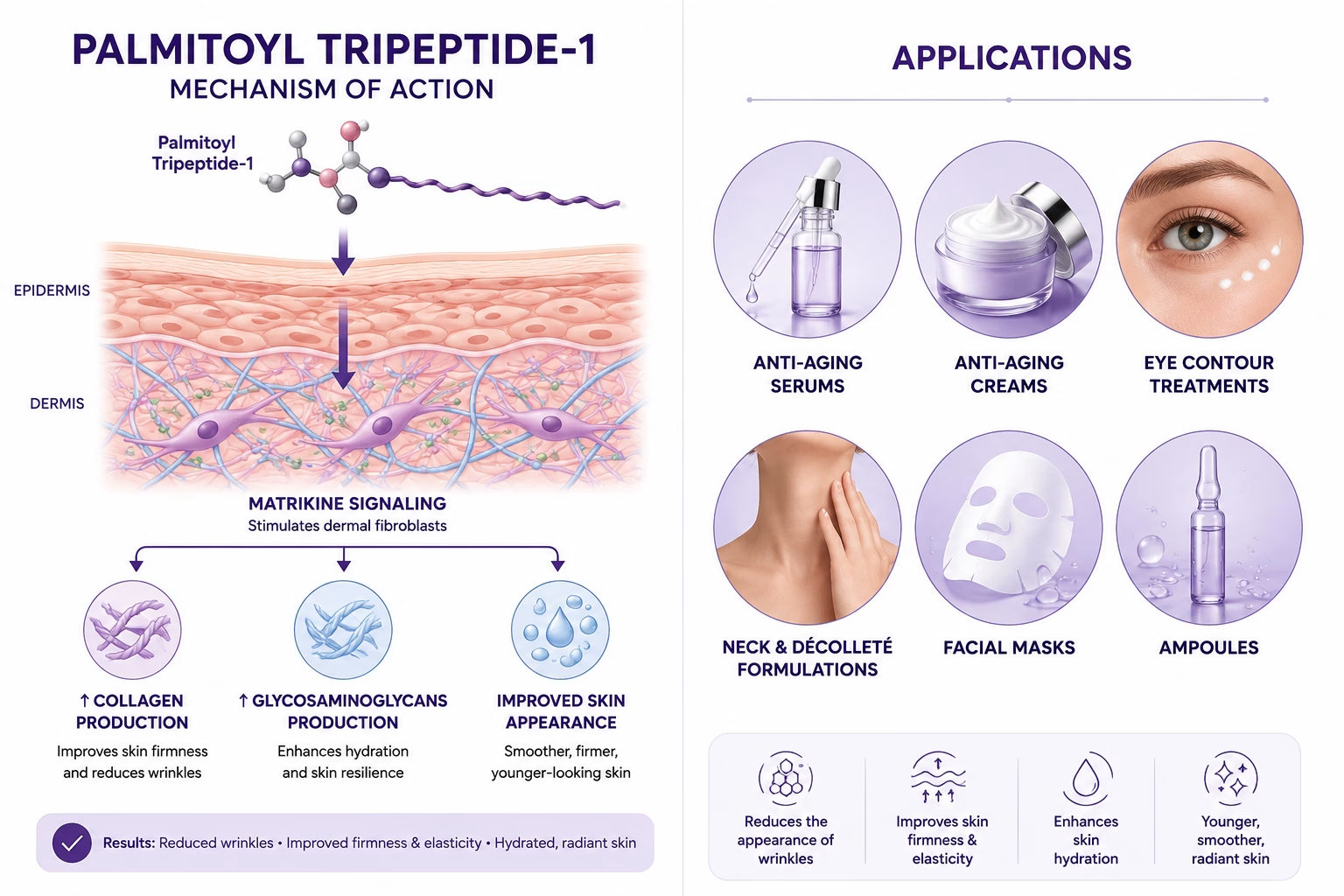
Palmitoyl Tripeptide-1 is a lipidated signal peptide formed by attaching palmitic acid to a tripeptide sequence related to extracellular-matrix signaling. Palmitoylation increases lipophilic character and is intended to improve affinity for skin lipid environments compared with the non-palmitoylated peptide.
Chemical & Technical Profile
| INCI / Identity | Palmitoyl Tripeptide-1 |
|---|---|
| CAS No. | 147732-56-7 |
| Molecular Formula | C30H54N6O5 |
| Molecular Weight | 578.79 g/mol |
| Physical Form | White to off-white powder |
| Solubility | Dispersible/soluble in appropriate aqueous or carrier systems; lipophilic character increased by palmitoylation |
| Functional Category | Palmitoylated matrikine peptide |
Mechanism of Action / Technical Function
The tripeptide sequence is commonly described as a matrikine-type signal that mimics fragments generated during extracellular-matrix turnover. Such fragments can act as biochemical signals associated with matrix renewal pathways. The palmitoyl chain functions as a delivery-oriented modification rather than as the active signal itself. Cosmetic performance therefore depends on both peptide integrity and effective dispersion of the amphiphilic molecule.
Formulation Guidelines
Pre-disperse or dissolve using the carrier system appropriate to the grade. Add during cool-down and avoid prolonged high temperature, extreme pH, oxidizing conditions, and proteolytic materials. In emulsions, the amphiphilic nature can favor interfacial or lipid-phase association, so ensure uniform distribution rather than assuming complete water solubility. In multi-peptide systems, confirm total peptide loading does not destabilize preservatives or rheology.
Compatibility & Stability
Monitor pH, color, odor, haze, precipitation, and peptide integrity. Amphiphilic peptides may adsorb to packaging surfaces or associate with surfactant micelles, so package-contact studies and retained-sample comparison are useful.
R&D, Scale-Up & Quality Control
Critical quality attributes for Palmitoyl Tripeptide-1 Powder include peptide identity, dispersion clarity, pH, and interfacial compatibility. The production record should fix Palmitoyl Tripeptide-1 carrier preparation, cool-down addition, and surfactant/emulsifier contact; otherwise a chemically correct formula can still show batch-to-batch physical variation. Before release, verify that the amphiphilic peptide remains uniformly incorporated without haze or package-surface loss.
Packaging, Shipping & Storage
Supplied in a sealed aluminum pouch. Store tightly closed, cool, dry, and protected from light and moisture. Refrigerated storage is preferred for long-term quality.
Applications
Anti-aging serums, firming creams, eye-area products, facial emulsions, gel-creams, and multi-peptide age-support systems.


Reviews
There are no reviews yet.