
Description
Description
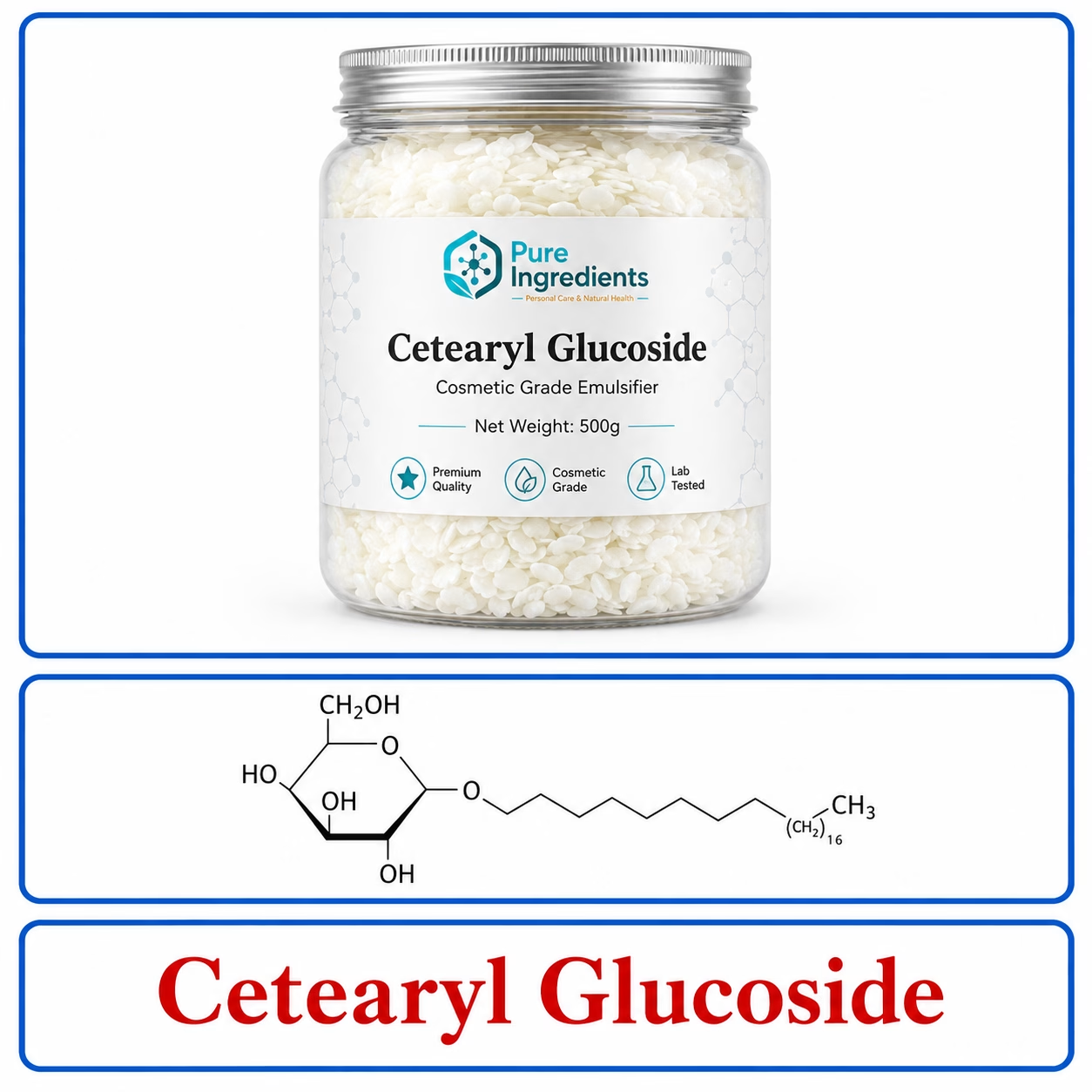
Cetearyl Glucoside is a nonionic emulsifier formed from glucose linked to long-chain cetearyl alcohol residues. It is commonly used with fatty alcohols to create lamellar oil-in-water emulsions with a natural-origin positioning and soft, substantive skin feel.
Chemical & Technical Profile
| INCI / Identity | Cetearyl Glucoside |
|---|---|
| CAS No. | Mixture; no single CAS |
| Molecular Formula | Alkyl glucoside mixture |
| Molecular Weight | Not applicable |
| Physical Form | White to off-white waxy solid/flakes |
| Solubility | Oil-phase dispersible; forms hydrated interfacial structures in emulsions |
| Functional Category | Nonionic alkyl-glucoside emulsifier |
Mechanism of Action / Technical Function
The glucoside head group hydrates in the aqueous phase while the long alkyl chains associate with the oil phase. At the interface, these amphiphiles reduce interfacial tension and can organize with fatty alcohols into liquid-crystalline lamellar structures. This interfacial network contributes both emulsification and long-term physical stability.
Formulation Guidelines
Melt into the oil phase with cetearyl alcohol or the intended structuring lipids. Heat oil and water phases to compatible temperature, emulsify under appropriate shear, then cool with controlled sweep mixing. The final viscosity is highly dependent on fatty-alcohol level and cooling history. In low-oil systems, additional rheology support may be required.
Compatibility & Stability
Monitor droplet size, viscosity development, phase separation, graininess, and heat/cool stability. Electrolytes and strongly surface-active ingredients can modify lamellar structure. Allow the batch to equilibrate before final viscosity release. Viscosity and structure should be released only after the batch has reached a defined equilibration period, not immediately after manufacture.
R&D, Scale-Up & Quality Control
R&D qualification of Cetearyl Glucoside should include Cetearyl Glucoside appearance, melt behavior, droplet size, and viscosity development. For manufacturing scale-up, define and control oil-phase melting with fatty alcohol, emulsification shear, and cooling history rather than transferring only the ingredient percentages. The batch is technically acceptable when the O/W emulsion remains fine, lamellar, and free from graininess or separation.
Packaging, Shipping & Storage
Supplied in a sealed aluminum pouch. Store tightly closed, cool, dry, and protected from heat and moisture.
Estimated Delivery: 10–15 Business Days
Applications
Natural-positioned creams, lotions, facial moisturizers, body care, sensitive-skin emulsions, and lamellar O/W systems.

Reviews
There are no reviews yet.