
Description
Description
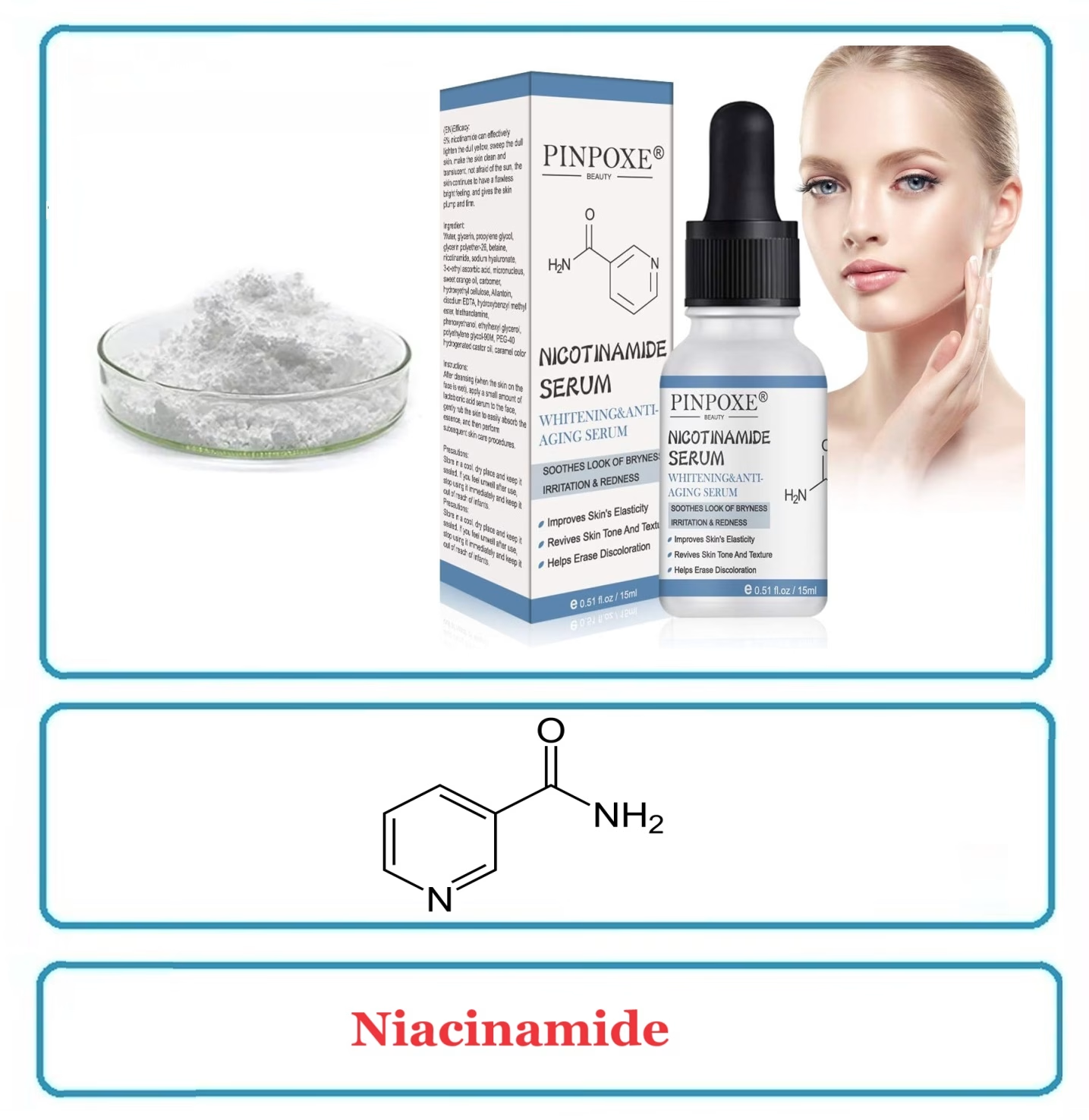
Niacinamide, also known as nicotinamide or vitamin B3, is a highly versatile water-soluble cosmetic active used in barrier-support, tone-evening, oil-control, hydration, and age-support formulations.
Chemical & Technical Profile
INCI: Niacinamide. CAS No.: 98-92-0. Molecular formula: C6H6N2O. Molecular weight: 122.12 g/mol. Physical form: white crystalline powder. Functional class: multifunctional skin-conditioning vitamin active. Niacinamide is readily soluble in water and can normally be incorporated through the aqueous phase or a controlled cool-down premix.
Mechanism of Action
Niacinamide functions as a precursor within the NAD+/NADP+ coenzyme system, supporting cellular redox metabolism and energy-dependent biochemical processes. In epidermal research, topical nicotinamide has been shown to stimulate de novo synthesis of ceramides and other stratum-corneum lipids, including free fatty acids and cholesterol, thereby supporting barrier function and reducing transepidermal water loss. Separate studies demonstrate reduced melanosome transfer to keratinocytes, providing a mechanistic basis for its role in uneven-tone formulations. Clinical work has also evaluated topical niacinamide for control of facial sebum production.
Formulation Guidelines
Pre-dissolve in purified water for reliable batch incorporation and uniform concentration. Avoid unnecessarily severe heat exposure and extreme pH conditions during processing. Niacinamide combines effectively with humectants, peptides, ceramide systems, polymers, botanical actives, and many stable vitamin C derivatives. In concentrated multi-active systems, evaluate total electrolyte load because salts and highly loaded water-soluble actives can alter polymer rheology and emulsion viscosity.
Compatibility & Stability
Monitor pH, color, odor, clarity, viscosity, and crystallization during accelerated and ambient stability. High loading can increase tack, modify ionic strength, and change the sensory profile. During scale-up, verify dissolution time and avoid localized high-concentration zones that can temporarily disturb polymer hydration or viscosity development. Controlled pH and thermal discipline also minimize formation of unwanted nicotinic-acid-related irritation potential.
R&D, Scale-Up & Quality Control
R&D qualification of Niacinamide (Vitamin B3) Powder should include assay/identity, solution clarity, pH, and crystallization tendency.
Packaging, Shipping & Storage
Supplied in a sealed aluminum pouch. Store tightly closed in a cool, dry environment and protect from moisture and excessive heat.
Estimated Delivery: 10–15 Business Days
Applications
Brightening serums, oil-control gels, barrier moisturizers, facial creams, body care, scalp treatments, and multifunctional skin-care systems.
Related Ingredients
Ferulic Acid Powder • Coenzyme Q10 (Ubiquinone)
Documentation & Use
- Certificate of Analysis (COA) for the lot shipped: available on request at info@pureingredients.us.
- Safety Data Sheet (SDS): available on request.
- SKU: PI-RM-0004
For cosmetic formulation use only. Not for direct application to skin.
Frequently Asked Questions
What is niacinamide?
Niacinamide is the amide form of vitamin B3 (INCI: Niacinamide, CAS 98-92-0, C6H6N2O, 122.12 g/mol). It is supplied as a white crystalline powder that dissolves readily in water.
Is niacinamide the same as nicotinamide or niacin?
Niacinamide and nicotinamide are two names for the same molecule; niacinamide is the INCI name used on cosmetic labels. Niacin (nicotinic acid) is a different compound.
How do I dissolve niacinamide powder?
Pre-dissolve it in purified water for uniform incorporation, then add it to the water phase or as a cool-down premix. Avoid unnecessarily severe heat and extreme pH during processing.
Can niacinamide be combined with vitamin C?
Yes, many formulas combine them. The practical concern is that strong heat and strongly acidic conditions can hydrolyze niacinamide to nicotinic acid, so keep processing temperatures moderate and run stability testing on the complete formula.
Which formulas is it used in?
Serums, gels, moisturizers, facial creams, body care and scalp-care products. It combines well with humectants, peptides, ceramide systems and polymers.
Which sizes are available?
50 g, 100 g, 250 g, 500 g and 1 kg.


C***n –
Used it in my cp soap and lotion