
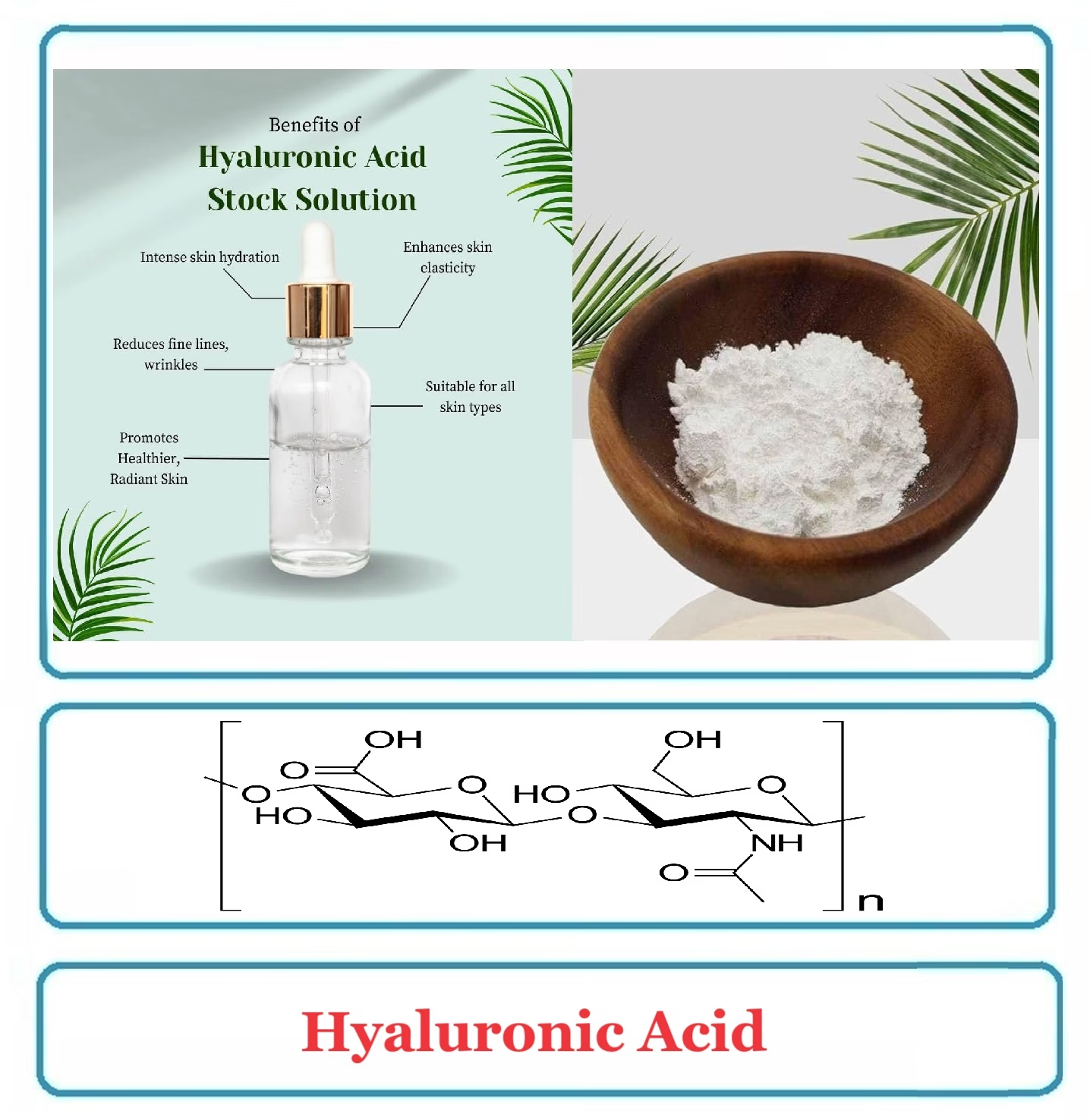
Description
Description
High Molecular Weight Hyaluronic Acid is a sodium hyaluronate grade with long polysaccharide chains designed for surface hydration, rheology contribution, and formation of a hydrated viscoelastic film. Its behavior differs materially from low-molecular-weight grades because polymer size controls solution viscosity, diffusion, and film characteristics.
Chemical & Technical Profile
| INCI / Identity | Sodium Hyaluronate |
|---|---|
| CAS No. | 9067-32-7 |
| Molecular Formula | Polysaccharide repeat unit |
| Molecular Weight | High molecular weight; grade-dependent |
| Physical Form | White to off-white powder |
| Solubility | Water-soluble; requires controlled hydration |
| Functional Category | High-molecular-weight glycosaminoglycan humectant / film former |
Mechanism of Action / Technical Function
Hyaluronate contains repeating glucuronic-acid and N-acetylglucosamine units bearing multiple hydrophilic groups and carboxylates. These chains bind and organize large amounts of water and entangle in solution, producing viscoelasticity. High-molecular-weight material remains predominantly associated with the skin surface, where it supports immediate hydration and film formation rather than acting as a deeply diffusing small molecule.
Formulation Guidelines
Hydrate slowly into purified water. Pre-wetting with glycerin or another compatible humectant can reduce fish-eye formation. Sprinkle into a strong vortex only when shear is controlled; excessive high shear can reduce molecular weight and viscosity. Allow sufficient hydration time before evaluating final rheology. Add salts and strongly ionic actives after the polymer has hydrated because electrolytes can alter chain expansion and viscosity.
Compatibility & Stability
Monitor viscosity after a defined conditioning period, clarity, pH, microbial quality, and stringiness. Viscosity should be measured under standardized spindle, speed, temperature, and hydration time. Strong cationic polymers can complex with hyaluronate and create precipitation or coacervation.
R&D, Scale-Up & Quality Control
R&D qualification of High Molecular Weight Hyaluronic Acid (HMW-HA) should include HMW-HA identity, hydration, viscosity, clarity, and microbial quality. For manufacturing scale-up, define and control powder wetting, hydration time, shear ceiling, and the point at which electrolytes are introduced rather than transferring only the ingredient percentages.
Packaging, Shipping & Storage
Supplied in a sealed aluminum pouch. Store tightly closed, cool, dry, and protected from humidity. Avoid repeated moisture exposure and excessive heat.
Applications
Hydrating serums, gels, essences, moisturizers, masks, eye-area products, and film-forming skin-care systems.
P***e –
Everything very well, arrive on time, well protected, excellent I will buy again
k***r –
I bought the powder for the first time ~ I’ll write it and leave it again ~ ^ ^ Thank you ~ ^ ^
Lami –
Very good company, I liked their products.
Lami –
Very good company, products.
C***n –
Excellent Product