
Description
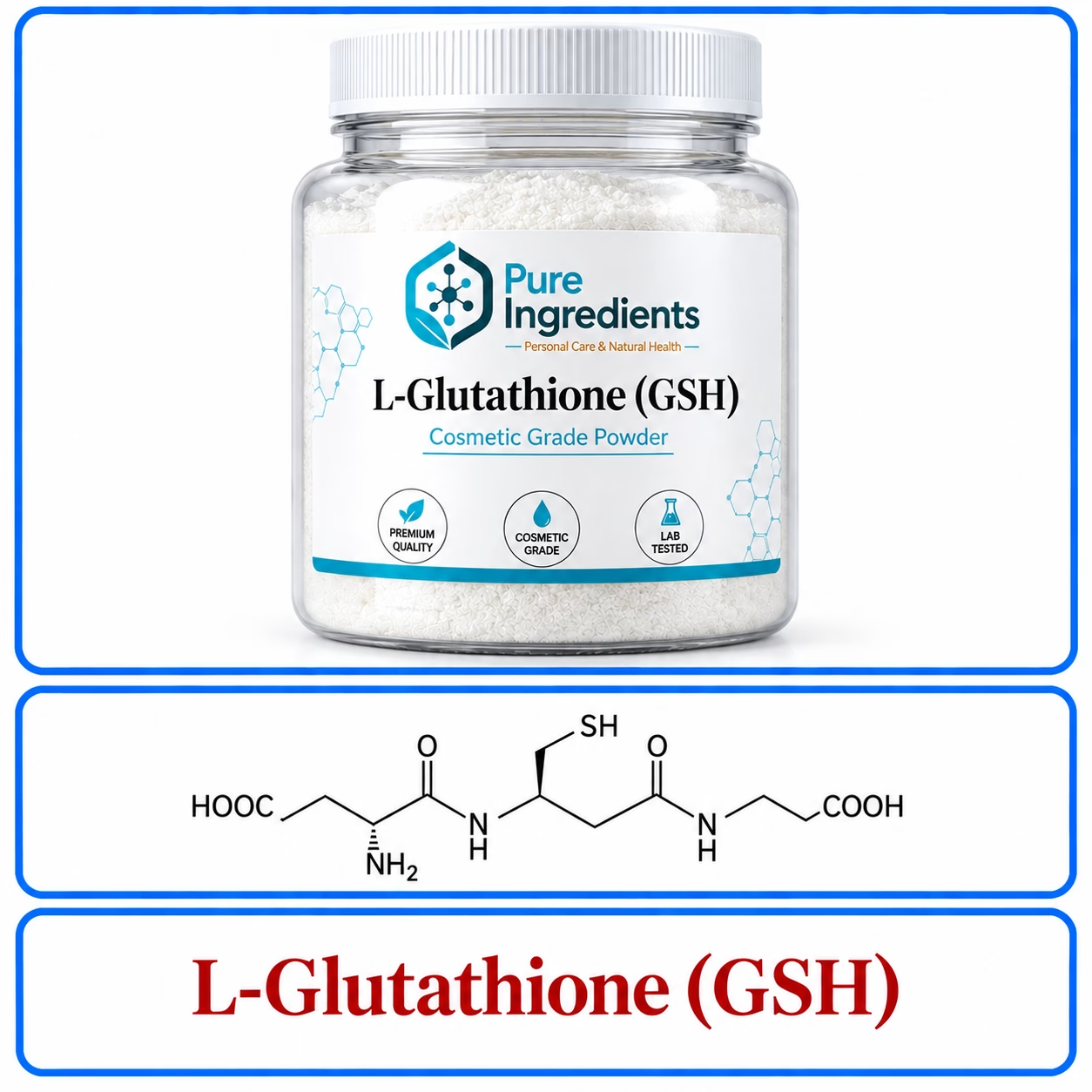
L-Glutathione (GSH) Powder 98% is a high-purity, water-soluble reduced glutathione tripeptide used in professional cosmetic formulation as an antioxidant active for serums, emulsions, masks, eye-area products, and advanced skin-care systems.
Glutathione is composed of the amino acids glutamic acid, cysteine, and glycine and is widely valued in cosmetic R&D for its antioxidant properties and its role in formulations designed to support a brighter-looking, more even, refreshed, and radiant skin appearance.
Pure Ingredients US supplies L-Glutathione Powder 98% as a cosmetic raw material for formulators, laboratories, product developers, and manufacturers.
Technical Information
| Property | Information |
|---|---|
| INCI Name | Glutathione |
| Chemical Name | L-Glutathione / Reduced Glutathione |
| Common Abbreviation | GSH |
| CAS Number | 70-18-8 |
| Purity | 98% |
| Cosmetic Function | Antioxidant / Skin-Conditioning Active |
| Physical Form | White crystalline powder |
| Solubility | Water-soluble |
| Recommended Phase | Aqueous phase / cool-down phase |
| Formulation Sensitivity | Heat, oxidation, oxygen exposure, and pH conditions |
Key Formulation Benefits
Powerful Antioxidant Ingredient
Reduced glutathione is valued in cosmetic formulations for its ability to participate in antioxidant systems designed to help protect the formulation and support the skin against oxidative stress associated with environmental exposure.
It is especially suited to modern skin-care concepts focused on:
- Antioxidant protection
- Skin radiance
- Dull-looking skin
- Uneven-looking skin tone
- Premium facial serums
- Advanced anti-aging concepts
- Multi-antioxidant systems
Radiance & Complexion-Focused Formulations
Glutathione is frequently incorporated into cosmetic products positioned for radiance, clarity, luminosity, and more even-looking complexion.
For professional cosmetic development, these benefits should be communicated as appearance-based cosmetic claims, rather than pharmaceutical or physiological treatment claims.
This makes L-Glutathione particularly suitable for formulations marketed as:
- Radiance serums
- Brightening cosmetic serums
- Dull-skin treatments
- Illuminating creams
- Overnight masks
- Eye-area products
- Antioxidant ampoules
- Premium facial concentrates
High-Purity Reduced Form
This product is supplied as 98% L-Glutathione in the reduced form (GSH).
The reduced form is the form normally specified in cosmetic and formulation applications where glutathione is selected as an active antioxidant ingredient.
Because glutathione is sensitive to oxidation, protecting the material and the finished formulation from excessive heat, oxygen, light, and unsuitable pH conditions is essential for maintaining product quality.
Typical Applications
L-Glutathione Powder 98% can be used in a broad range of professional cosmetic formulations, including:
- Facial serums
- Antioxidant serums
- Radiance serums
- Cosmetic ampoules
- Creams
- Lotions
- Facial emulsions
- Eye-area formulations
- Hydrogel products
- Facial masks
- Overnight masks
- Multi-active skin-care systems
Formulation Guidance
L-Glutathione is water-soluble and is generally incorporated into the aqueous portion of the formulation.
For best formulation practice, it is commonly added during the cool-down stage rather than subjected to prolonged high-temperature processing.
The material should first be dissolved completely in a suitable aqueous phase under controlled mixing.
Temperature Control
Avoid unnecessary exposure to elevated temperatures.
Where possible, glutathione should be introduced after the main heating and emulsification stages once the batch has cooled sufficiently for the active system.
Prolonged heating can accelerate degradation and should be avoided.
Oxidation Control
Reduced glutathione is oxidation-sensitive.
During formulation development, consideration should be given to:
- Oxygen exposure
- Headspace in the finished package
- Metal contamination
- Water quality
- Processing temperature
- Light exposure
- Packaging permeability
- Interaction with other oxidizable ingredients
Good manufacturing practice and properly controlled raw-material handling are especially important for products containing oxidation-sensitive actives.
pH Considerations
Glutathione stability is influenced by the pH of the formulation.
The final pH should therefore be selected according to the complete formulation system rather than adjusting the product solely around one active ingredient.
During R&D, formulators should evaluate glutathione stability across the intended pH range and monitor:
- Color change
- Odor
- Assay where applicable
- pH drift
- Precipitation
- Product clarity
- Overall stability
Avoid highly alkaline systems unless stability has been specifically demonstrated.
Color Stability Monitoring
Oxidative degradation may become visible through changes in product color or overall appearance.
Accelerated and real-time stability testing should therefore include regular monitoring of:
- Initial color
- Color shift
- Yellowing
- Odor development
- Clarity
- pH
- Precipitation
- Phase stability
Color stability is particularly important in transparent serums and ampoules, where even minor oxidation may be visually noticeable.
Packaging Recommendations
Protective packaging can materially improve the stability of a glutathione-containing formulation.
Depending on the final product, formulators may consider:
- Airless packaging
- Low-headspace filling
- Opaque or light-protective containers
- Packaging with reduced oxygen permeability
- Controlled filling conditions
Clear packaging should be used only after adequate photostability and oxidation testing.
Building an Advanced Antioxidant System
L-Glutathione can be incorporated into broader antioxidant and radiance systems containing compatible cosmetic ingredients such as:
- Niacinamide
- 3-O-Ethyl Ascorbic Acid
- Vitamin C derivatives
- Alpha-Arbutin
- N-Acetyl Glucosamine
- Ferulic Acid
- Tocopherol
- Resveratrol
- Ectoin
- Beta-Glucan
- Hyaluronic Acid
Compatibility, pH requirements, solubility, oxidation behavior, and total active loading must be assessed for the complete formulation.
The presence of several antioxidants does not automatically guarantee improved stability; the total redox environment of the formulation should be evaluated experimentally.
Example Formulation Positioning
L-Glutathione is particularly well suited to sophisticated skin-care concepts such as:
Glutathione + Niacinamide Radiance Serum
Glutathione + Vitamin C Derivative Antioxidant Serum
Glutathione + Alpha-Arbutin Complexion Serum
Glutathione + N-Acetyl Glucosamine Multi-Active Serum
Glutathione + Hyaluronic Acid Hydrating Radiance Serum
These combinations require individual stability and compatibility assessment before commercialization.
Handling & Storage
Because L-Glutathione is sensitive to oxidation and environmental exposure, the raw material should be handled carefully.
Recommended handling practices include:
- Keep the container tightly sealed.
- Minimize exposure to air.
- Protect from excessive heat.
- Protect from direct light.
- Avoid unnecessary humidity exposure.
- Use clean, dry formulation equipment.
- Close the original container immediately after dispensing.
Storage conditions should follow the supplier’s Certificate of Analysis, specification, and storage documentation for the individual production lot.
Professional Cosmetic Raw Material
Pure Ingredients US supplies L-Glutathione (GSH) Powder 98% as a raw material intended for professional cosmetic formulation, research, laboratory development, and manufacturing.
This material is supplied as a cosmetic ingredient, not as a finished cosmetic, pharmaceutical, injectable, or therapeutic product.
The formulator or manufacturer is responsible for determining:
- Suitable use concentration
- Formula compatibility
- Finished-product stability
- Preservation strategy
- Packaging compatibility
- Product safety
- Cosmetic claims
- Label compliance
- Regulatory suitability for the target market
Appropriate laboratory testing and finished-product validation should be completed before commercial sale.
Shipping Information
Estimated processing and shipping time: 10–15 business days.
Shipping time may vary depending on stock availability, order quantity, destination, customs processing, and carrier conditions.
For formulation projects, pilot production, or commercial manufacturing, adequate procurement lead time should be allowed.
Reviews
There are no reviews yet.