
Description
Description
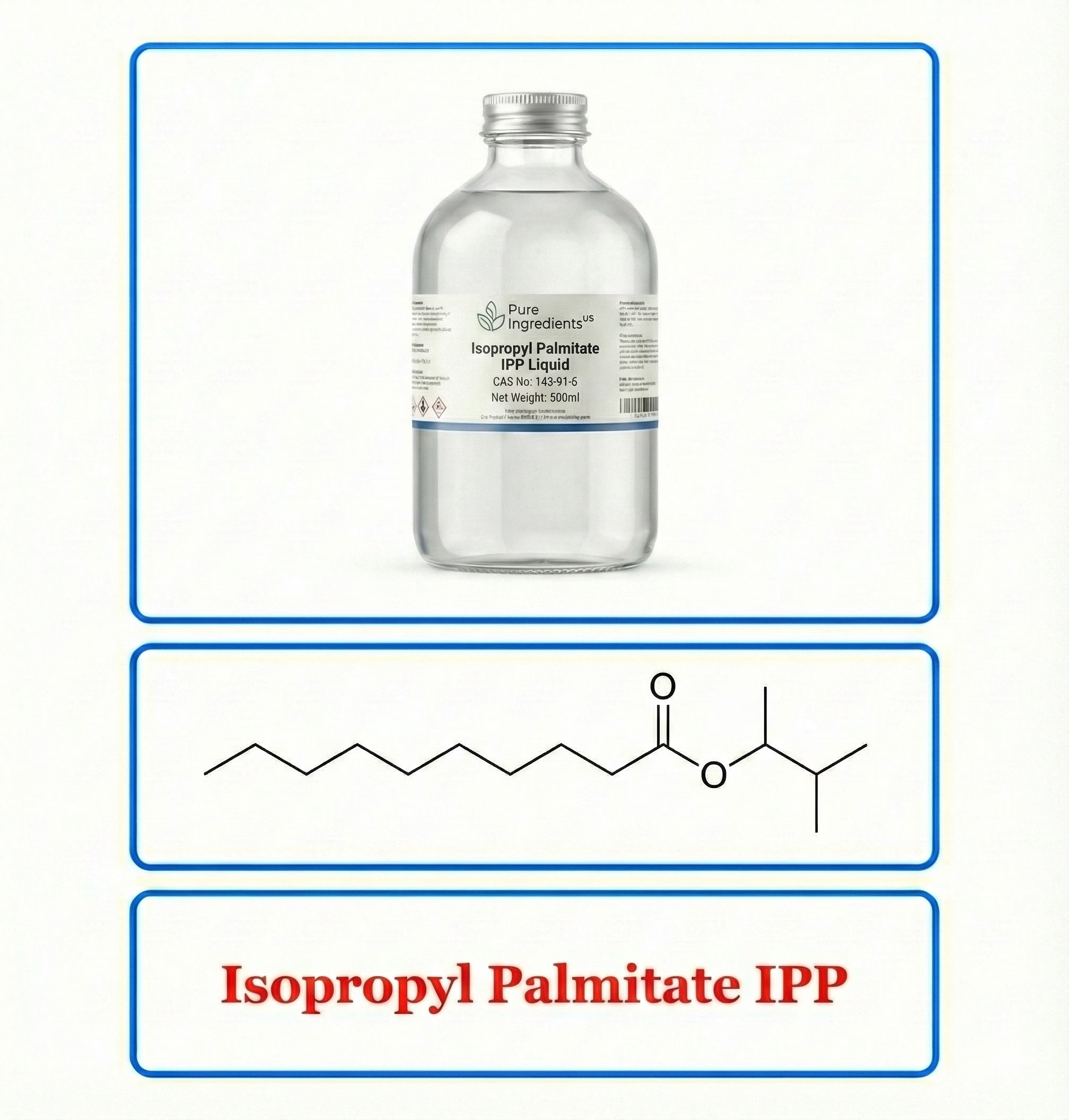
Isopropyl Palmitate is the ester of isopropyl alcohol and palmitic acid and is widely used as a low-viscosity emollient and spreading agent. Its defined molecular structure gives predictable sensory behavior compared with variable botanical oils and makes it useful for reducing drag and heaviness in creams, lotions, and anhydrous products.
Chemical & Technical Profile
| INCI / Identity | Isopropyl Palmitate |
|---|---|
| CAS No. | 142-91-6 |
| Molecular Formula | C19H38O2 |
| Molecular Weight | 298.51 g/mol |
| Physical Form | Clear colorless oily liquid |
| Solubility | Oil-soluble; insoluble in water |
| Functional Category | Fatty ester emollient / spreading agent |
Mechanism of Action / Technical Function
The ester lowers interfacial friction and spreads rapidly over skin and hair, creating slip without the high viscosity of triglyceride oils. Its relatively nonpolar structure also serves as a carrier for many oil-soluble actives and can modify the solubility of waxes and lipophilic ingredients.
Formulation Guidelines
Add directly to the oil phase or use in anhydrous blends. It can reduce viscosity of structured oil phases, so rebalance waxes and fatty alcohols when replacing heavier oils. In emulsions, include IPP when calculating total oil-phase polarity and emulsifier requirement. It can be used to improve dissolution of some lipophilic actives, but actual solubility must be confirmed experimentally.
Compatibility & Stability
Monitor odor, color, hydrolytic stability, and emulsion behavior. Strongly acidic or alkaline aqueous systems can promote ester hydrolysis over time. Package compatibility should be evaluated for high concentrations.
R&D, Scale-Up & Quality Control
Isopropyl Palmitate (IPP) should be qualified against IPP identity, clarity, odor, and hydrolytic cleanliness, using a retained reference where visual change is relevant. During scale-up, document oil-phase loading, wax balance, and exposure to extreme aqueous pH and reproduce the laboratory sequence without unplanned thermal or shear exposure. A practical release gate is confirmation that the emulsion retains viscosity and package compatibility without ester-related odor or separation.
Packaging, Shipping & Storage
Supplied in a tightly sealed liquid container. Store cool, protected from direct light and excessive heat.
Estimated Delivery: 10–15 Business Days
Applications
Creams, lotions, facial oils, cleansing oils, body care, hair serums, makeup removers, and anhydrous emollient systems.
Reviews
There are no reviews yet.