
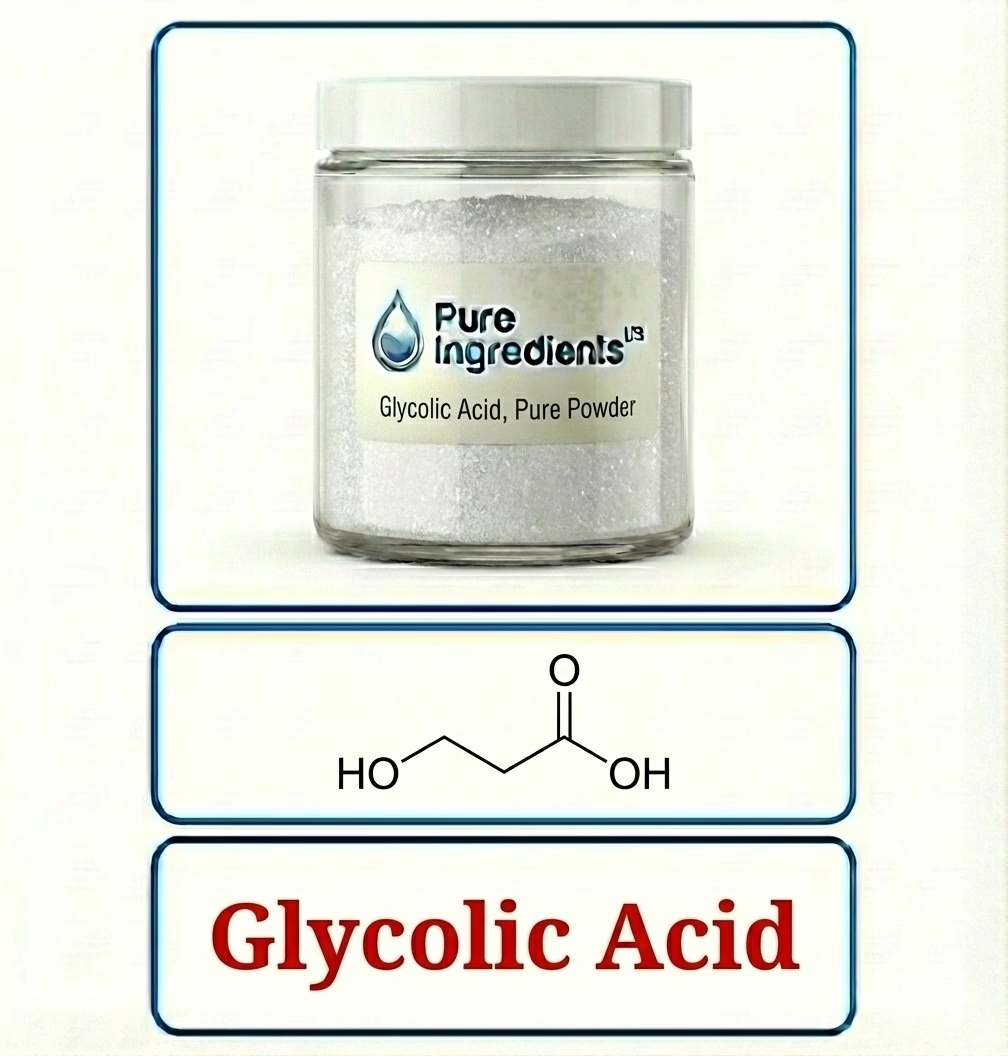
Description
Description
Glycolic Acid is the smallest alpha-hydroxy acid and one of the most efficient water-soluble acids used in controlled exfoliation systems. Its low molecular size gives rapid diffusion through hydrated stratum-corneum environments, making concentration, pH, buffering, and exposure time central to both performance and tolerability.
Chemical & Technical Profile
| INCI / Identity | Glycolic Acid |
|---|---|
| CAS No. | 79-14-1 |
| Molecular Formula | C2H4O3 |
| Molecular Weight | 76.05 g/mol |
| Physical Form | White crystalline powder |
| Solubility | Highly soluble in water and alcohol |
| Functional Category | Alpha-hydroxy acid exfoliant / pH-active ingredient |
Mechanism of Action / Technical Function
Glycolic Acid promotes desquamation by reducing corneocyte cohesion and altering calcium-dependent processes within the stratum corneum. The biologically relevant parameter is not nominal acid percentage alone but the concentration of non-ionized free acid, which rises as pH decreases relative to the acid’s pKa. This is why two formulations containing the same total glycolic-acid percentage can produce materially different effects.
Formulation Guidelines
Dissolve fully in purified water and adjust pH under controlled mixing. Use acid-resistant processing equipment and verify compatibility of pumps, seals, liners, and closures. Determine target pH and buffer capacity before scale-up; excessive neutralization creates glycolate salts and changes the effective free-acid fraction. Rheology modifiers must tolerate both low pH and electrolyte load. Add soothing humectants only after the acid system is technically defined.
Compatibility & Stability
Monitor pH drift, color, odor, viscosity, crystallization, and packaging compatibility. Accelerated aging should include temperature cycling and closure-contact evaluation. A stable pH is essential because small shifts can change the free-acid fraction and therefore product behavior.
R&D, Scale-Up & Quality Control
For Glycolic Acid Powder, incoming and in-process QC should control identity, pH, active-acid basis, viscosity, and package compatibility. Pilot transfer should lock glycolic-acid charging, neutralization, cooling, and final equilibration, because these variables directly influence reproducibility. Release the formulation only after the specified pH remains stable and the package shows no acid-related interaction.
Packaging, Shipping & Storage
Supplied in a sealed aluminum pouch. Store tightly closed, dry, cool, and protected from humidity. Handle with appropriate PPE and prevent moisture pickup.
Estimated Delivery: 10–15 Business Days
Applications
AHA toners, exfoliating serums, masks, texture-refining lotions, body-care systems, and professional acid-based cosmetic formulations.

Reviews
There are no reviews yet.