
Description
Description
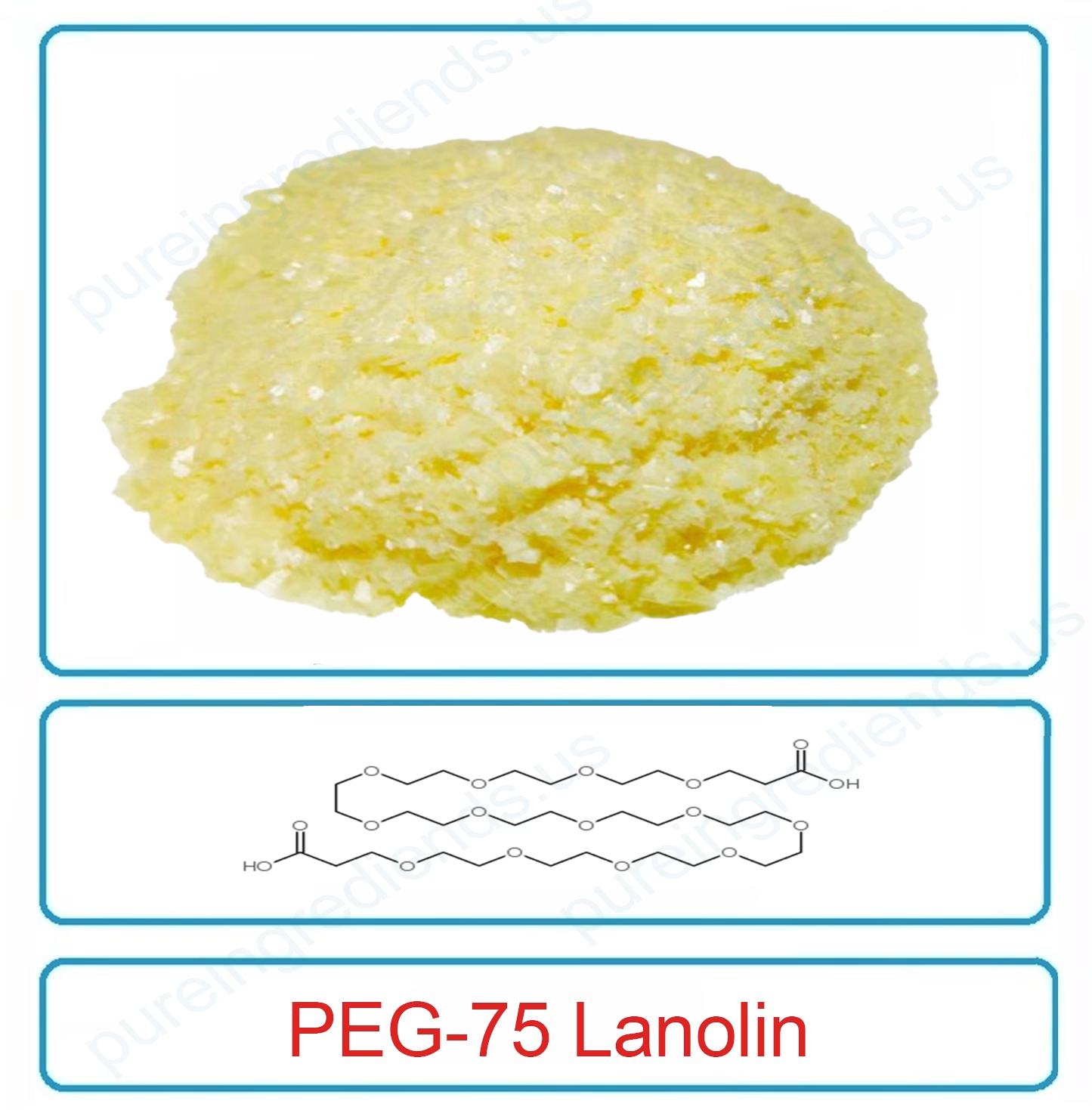
PEG-75 Lanolin is an ethoxylated derivative of lanolin designed to retain the conditioning character of wool lipids while gaining substantial compatibility with aqueous and surfactant systems. It is particularly useful in cleansers, shampoos, and liquid soaps where unmodified lanolin would be too hydrophobic or difficult to disperse.
Chemical & Technical Profile
| INCI / Identity | PEG-75 Lanolin |
|---|---|
| CAS No. | Ethoxylated lanolin; mixture |
| Molecular Formula | Ethoxylated lanolin derivatives |
| Molecular Weight | Not applicable |
| Physical Form | Amber paste, waxy solid, or viscous material depending on grade |
| Solubility | Water-dispersible to water-soluble |
| Functional Category | Hydrophilic lanolin derivative / emollient / solubilizer |
Mechanism of Action / Technical Function
Ethoxylation introduces polyoxyethylene chains that hydrate in water and provide nonionic surfactant character, while the lanolin-derived hydrophobic portion retains affinity for skin and hair. This amphiphilic structure supports solubilization, refatting, and deposition, reducing the stripped feel associated with strong cleansing systems.
Formulation Guidelines
Add to the surfactant or aqueous phase with adequate mixing and moderate heat if needed to reduce viscosity. In clear cleansers, check cloud point and clarity after fragrance, salts, and amphoteric surfactants are added. PEG-75 Lanolin can reduce viscosity in some surfactant systems or alter salt curves, so optimize electrolyte adjustment only after the ingredient is present.
Compatibility & Stability
Monitor clarity, viscosity, odor, color, cloud point, and phase stability. Nonionic ethoxylated materials can interact with high fragrance loads and electrolytes. In preservation-sensitive systems, verify that added solubilization does not change preservative partitioning.
R&D, Scale-Up & Quality Control
Critical quality attributes for PEG-75 Lanolin include PEG-75 Lanolin color, odor, consistency, and water/surfactant dispersibility. The production record should fix addition temperature, surfactant sequence, and final salt/fragrance adjustment; otherwise a chemically correct formula can still show batch-to-batch physical variation. Before release, verify that the cleanser remains stable without unexpected clouding, viscosity collapse, or odor drift.
Packaging, Shipping & Storage
Supplied in a sealed container appropriate to the waxy or viscous grade. Store tightly closed, cool, dry, and protected from excessive heat.
Estimated Delivery: 10–15 Business Days
Applications
Shampoos, body washes, facial cleansers, liquid soaps, conditioning washes, shaving products, and mild surfactant systems.
Reviews
There are no reviews yet.