
Description
Description
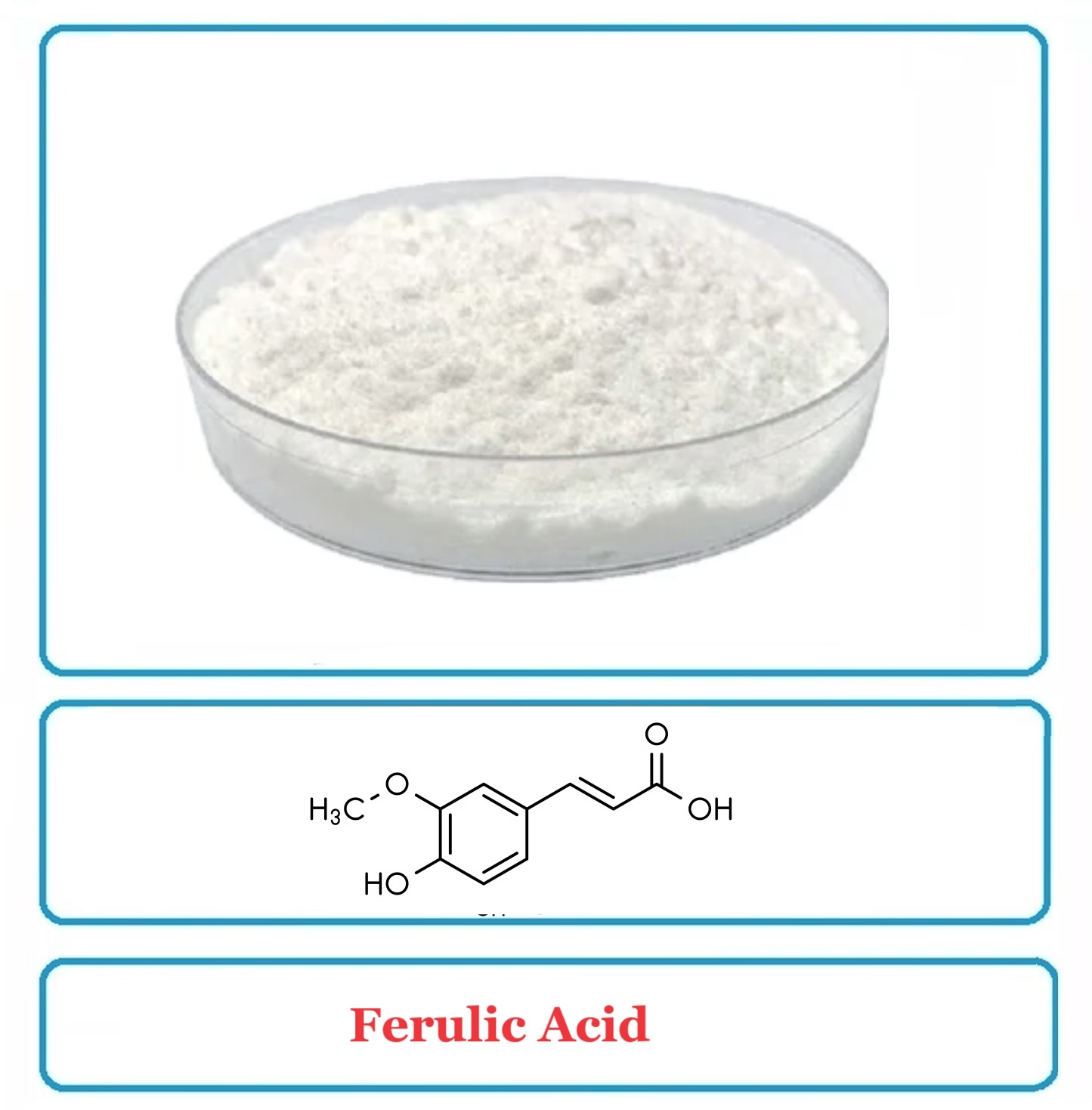
Ferulic Acid is a phenolic hydroxycinnamic acid used in advanced antioxidant systems, particularly formulations combining vitamin C and vitamin E. Its aromatic ring, phenolic hydroxyl group, and conjugated side chain provide radical-stabilizing behavior that makes Ferulic Acid technically valuable in oxidative-stress and photoprotection-oriented cosmetic systems.
Chemical & Technical Profile
INCI: Ferulic Acid. CAS No.: 1135-24-6. Molecular formula: C10H10O4. Molecular weight: 194.18 g/mol. Physical form: off-white to pale yellow crystalline powder. Functional class: phenolic antioxidant / cosmetic active. Ferulic Acid has low direct water solubility and should not be expected to dissolve simply by addition to a finished aqueous base.
Mechanism of Action
Ferulic Acid acts as a redox-active phenolic antioxidant capable of stabilizing radical intermediates through resonance across its conjugated structure. In topical antioxidant research, incorporation of ferulic acid into vitamin C and vitamin E systems improved chemical stability and enhanced photoprotective performance. Its value therefore includes both direct antioxidant chemistry and contribution to the architecture of multi-antioxidant formulations.
Formulation Guidelines
Use a deliberate solubilization strategy. Appropriate approaches include compatible glycols or solvents, controlled partial neutralization, or a pre-designed carrier phase. Avoid indiscriminate alkalization simply to force dissolution, because pH elevation changes ionization state and can destabilize other actives. In low-pH vitamin C systems, solubility, clarity, and precipitation resistance must be established experimentally. Ferulic Acid should be added under controlled temperature with minimal unnecessary aeration and protected from prolonged light exposure. Bench-scale solvent screening is strongly recommended before production scale-up, particularly when the commercial target is an optically clear serum.
Compatibility & Stability
Key development risks are precipitation, progressive yellowing or ambering, oxidation, pH drift, and interaction with trace metals. Chelation and oxygen-management strategies can improve robustness. Monitor color, clarity, odor, pH, active content where possible, and low-temperature precipitation during stability testing.
R&D, Scale-Up & Quality Control
R&D qualification of Ferulic Acid Powder should include solution clarity, color, pH, and low-temperature precipitation.
Packaging, Shipping & Storage
Supplied in a sealed aluminum pouch. Keep tightly closed, dry, and protected from direct light, humidity, and excessive heat.
Estimated Delivery: 10–15 Business Days
Applications
Vitamin C serums, antioxidant concentrates, facial treatments, emulsions, and advanced age-support systems.
Related Ingredients
Documentation & Use
- Certificate of Analysis (COA) for the lot shipped: available on request at info@pureingredients.us.
- Safety Data Sheet (SDS): available on request.
- SKU: PI-RM-0002
For cosmetic formulation use only. Not for direct application to skin.

Reviews
There are no reviews yet.